All projects
Aerospace / Research

Hovering Through New Horizons

A single-seat flying machine that takes off straight up, no runway. The trick: instead of pushing a wing through the air, it holds two wings still and blows air along them to make lift. Electric, solar-skinned, and quiet enough for a driveway. This was the Bachelor of Engineering thesis: a full concept worked out on paper, from the airflow to the crash safety. It went on to win the IMechE Best Project award and the Robert W Flux Award for its technical presentation.
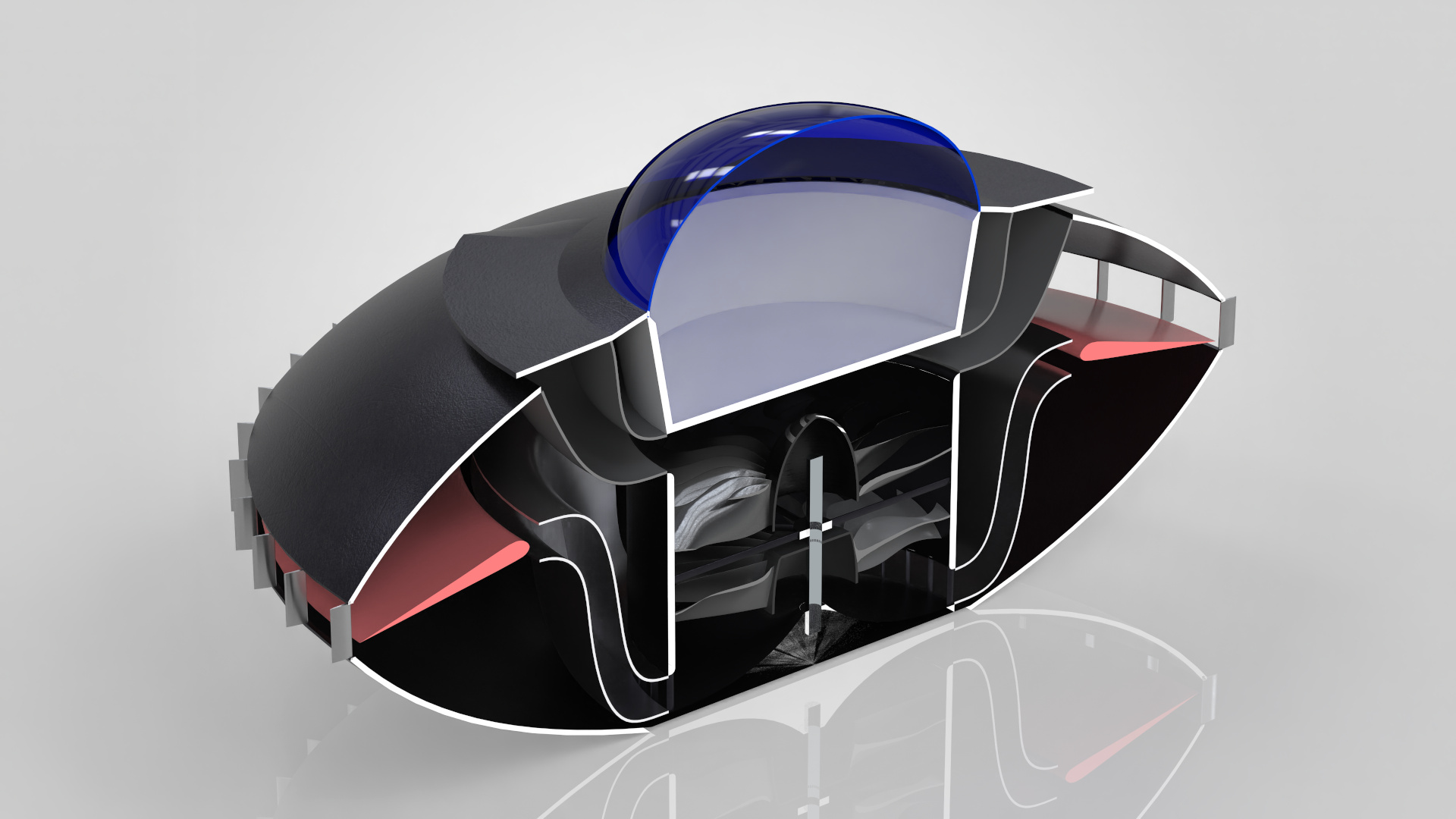
Isometric cutaway render of the craft: domed cockpit, counter-rotating ducted fans and the two stationary wings.

01 Reverse the wing

A normal wing makes lift by moving through the air. Flip that idea: keep the wing perfectly still and push the air along it instead. Lift with no forward motion means the craft can rise straight off a small platform, the way nothing with a fixed wing usually can.

That reversal, moving the air instead of the wing, set the shape of the whole machine: two stationary wings fed by a stream of fast air from below.
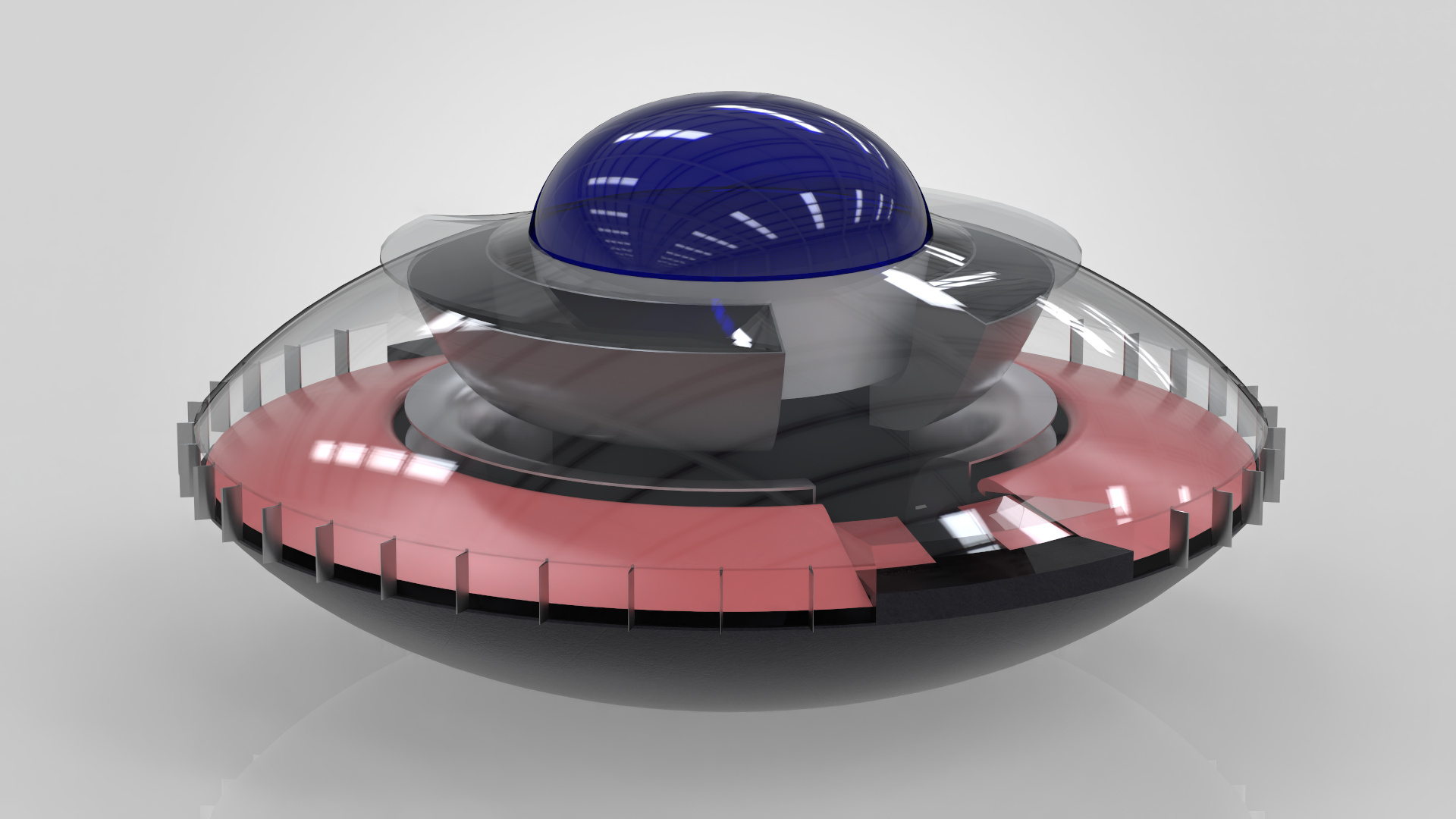
Top view of the craft showing the two stationary ring aerofoils around the body and the domed cockpit.
Loading 3D model

02 The first sketch

Before any CAD, the whole craft lived on lined paper. These are the original 2016 concept drawings, with every part numbered. They are where the idea first took shape.
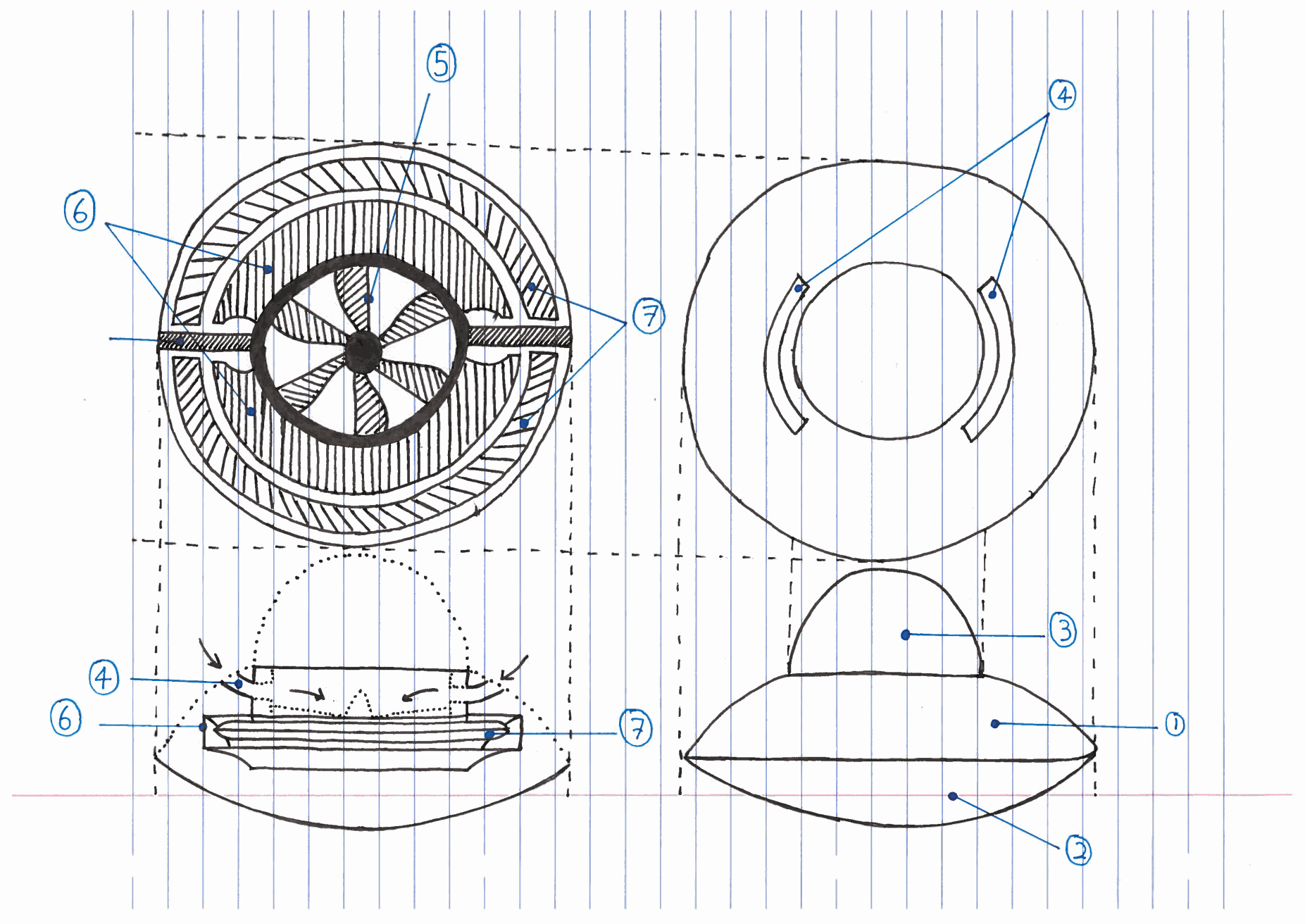
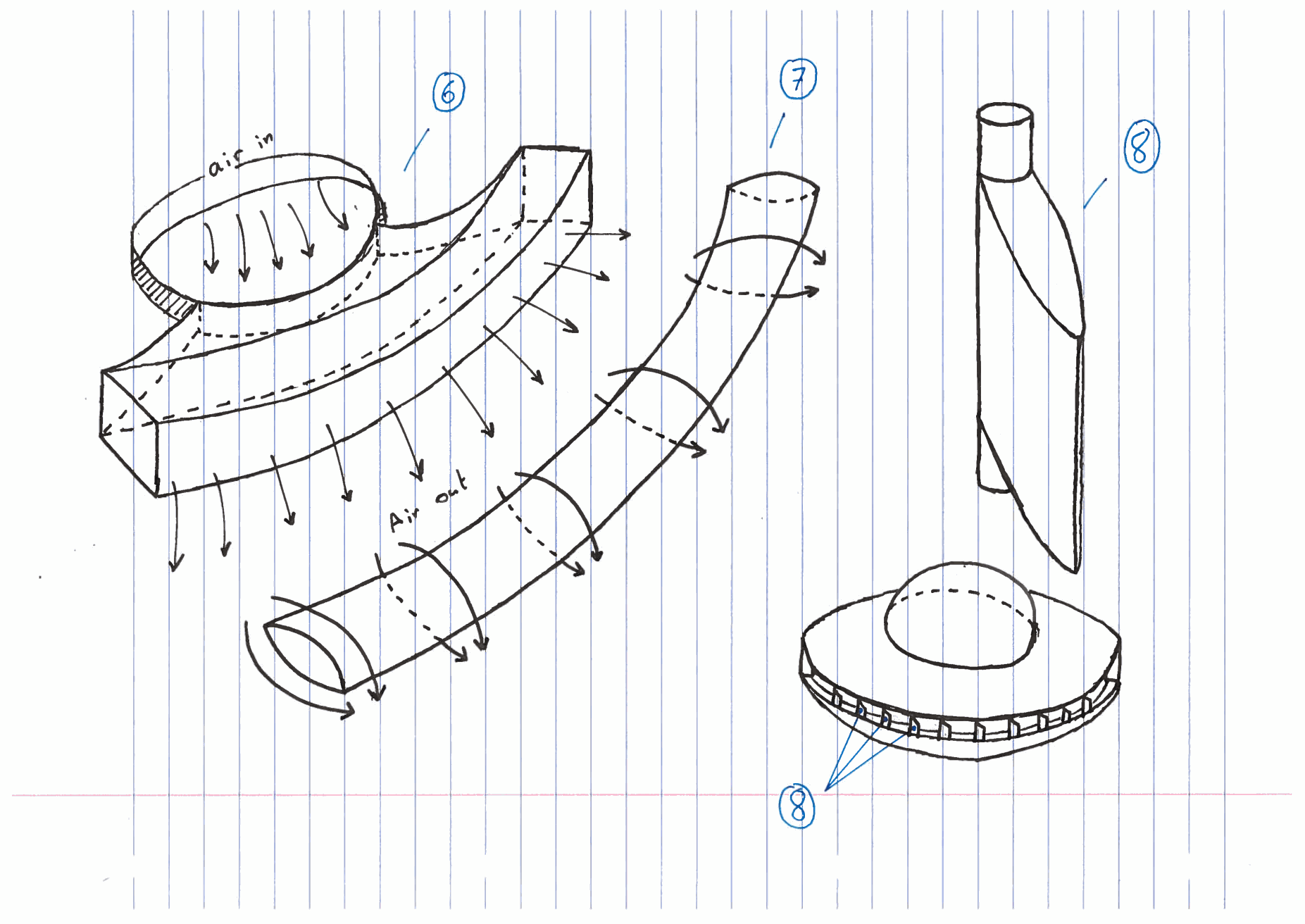
01 Top body Covers and shields the inner components.
02 Bottom body The base that holds everything together.
03 Windshield Shields the driver from the wind.
04 Air ducts Wide channels that feed air to the fans.
05 Fan blades Counter-rotating, cancel the gyroscopic effects, draw air in at high pressure.
06 Air nozzles Throw the air along the aerofoils at high speed.
07 Aerofoils Make the lift.
08 Air blades Steer the leftover air to manoeuvre.

03 Follow the air

The whole craft is really one air path, in seven stages:
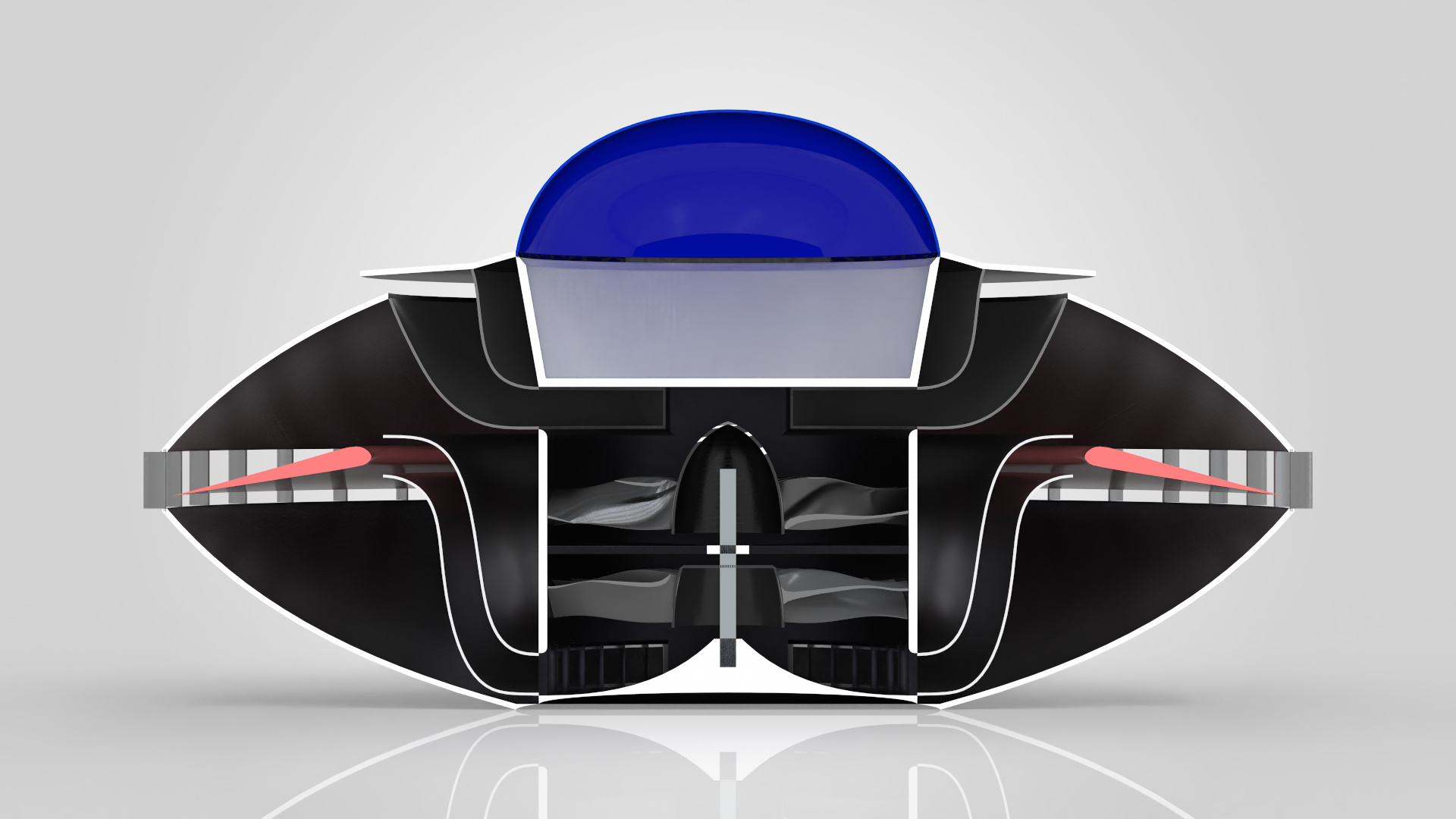
  • Inlet. A rain-hooded opening slows the incoming air to kill vortices.
  • Squeeze. A narrowing duct speeds the air back up.
  • Compress. Two counter-rotating ducted fans, twenty-two blades each, pack the air tighter.
  • Straighten. A cone-shaped base and a set of diffusers take the spin out of the flow.
  • Hold. A constant-width duct keeps the speed up to the wings.
  • Lift. The air hits the two wings at an eleven-degree angle and makes lift.
  • Steer. Movable air blades point the exit flow to turn the craft.
Front cross-section of the craft showing the full air path: ducts, counter-rotating fans, de-swirl cone and the two wings.

04 A craft for the driveway

The point was clean, short-range personal transport. Zero emissions, electric, with monocrystalline solar cells skinning the shell. It lifts off vertically from a five-by-five-metre platform, so no airport and no runway.

And it is quiet. The electric motor sits far below a car or an aircraft on noise, which is what makes it a fit for residential streets.
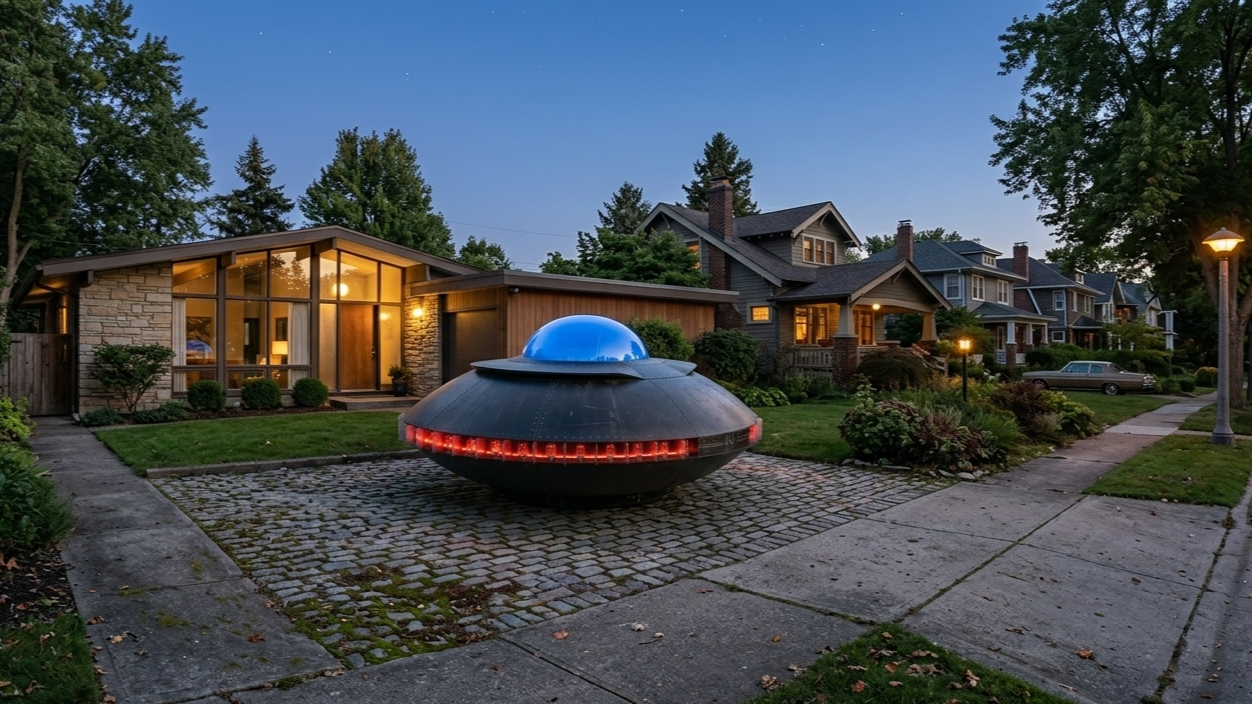
The craft parked on a suburban driveway, an AI-generated picture of the concept in a real setting.

An AI-generated image: the craft's own design dropped onto a driveway to picture how it might sit in a real one.

05 Engineering it light

Every gram fights gravity, so material choice was the whole battle:

  • Body, ducts, casing: dry carbon fibre, stiff and conductive, so a lightning strike runs around the shell like a Faraday cage, not through the driver.
  • Fan hubs: titanium Ti-6Al-4V.
  • Wings: an aluminium-honeycomb-and-carbon-fibre sandwich, stiff for almost no weight.
  • Windshield: laminated Plexiglas.

The target was to stay under one tonne. The concept came in just over, near 1,003 kg.
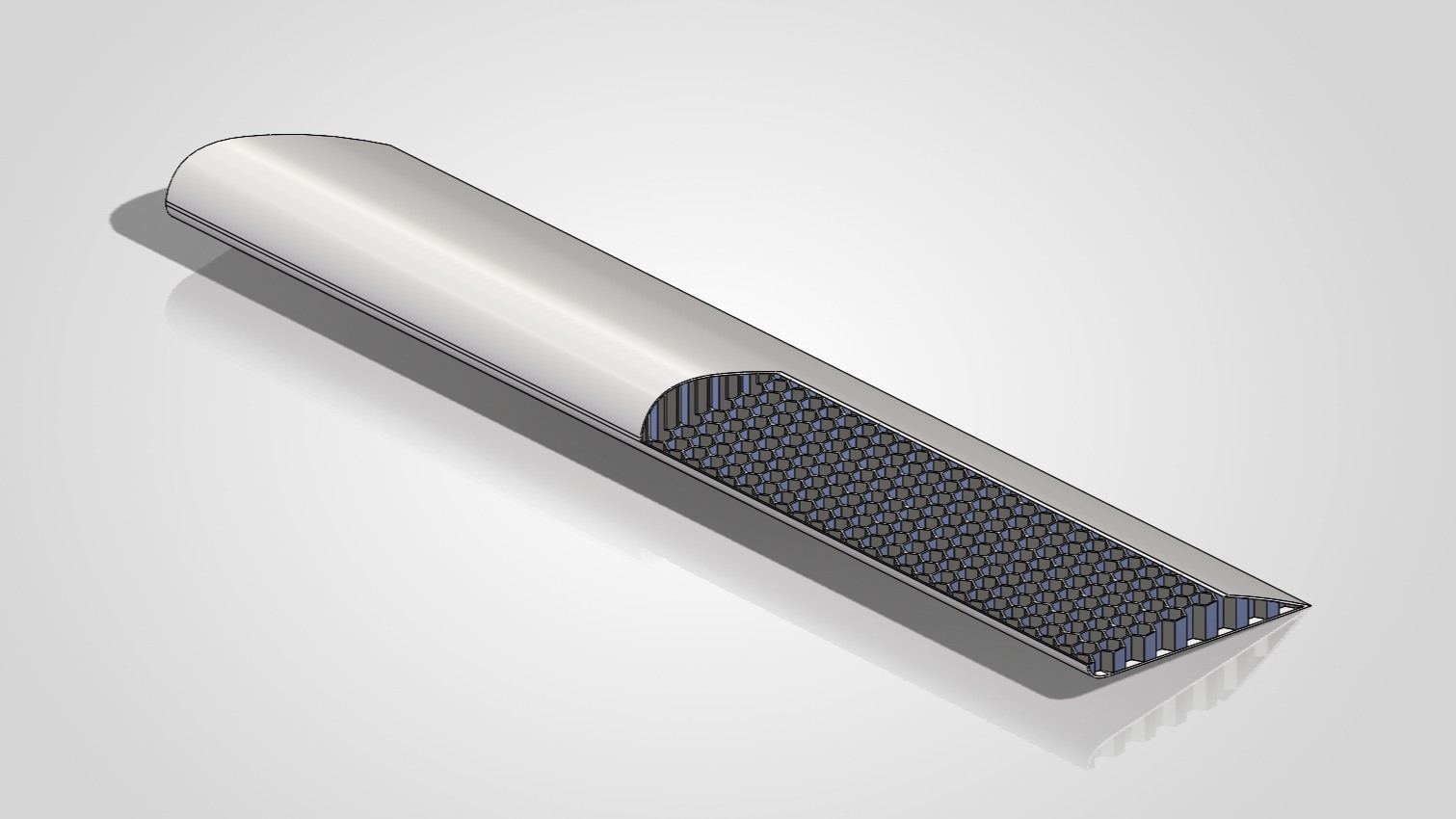
Wing cross-section showing the aluminium-honeycomb-and-carbon-fibre sandwich under the skin.

06 Built to survive a bad day

The design starts from what happens when something fails:

Autopilot + GPS Flies itself on GPS, with a manual override for the driver.
Conductive shell The carbon shell routes a lightning strike around the cockpit.
Dual parachutes Two parachutes deploy sideways under pressure, so they cannot tangle.
Crash protection Formula-1-style crash zones and cockpit airbags.
Domed windshield A hemispherical windshield spreads impact load across the whole dome.
Self-cooling The same air that lifts the craft cools the motors and batteries, so no radiator.
Gyro turbines The counter-rotating turbines double as a gyro-stabiliser.

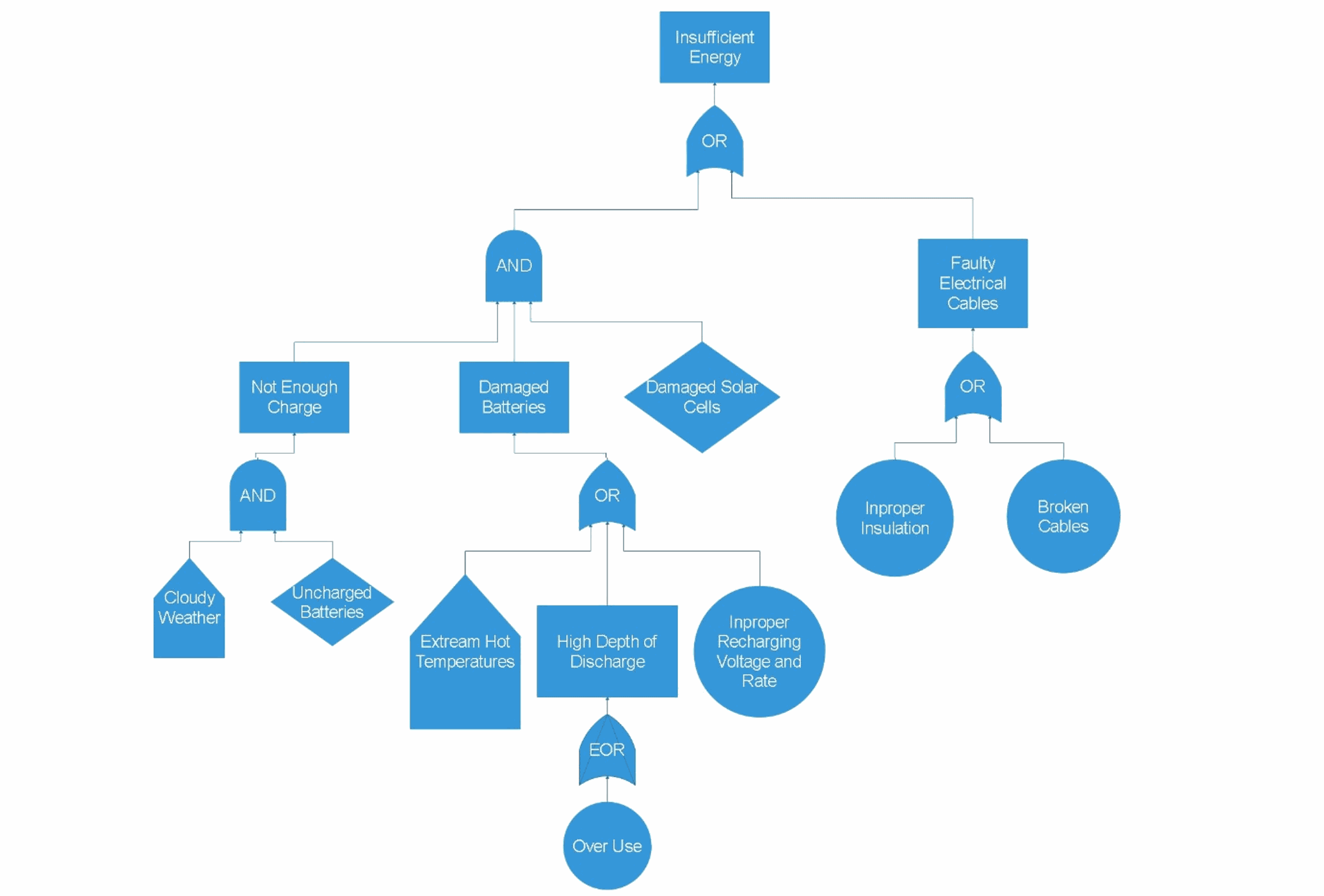
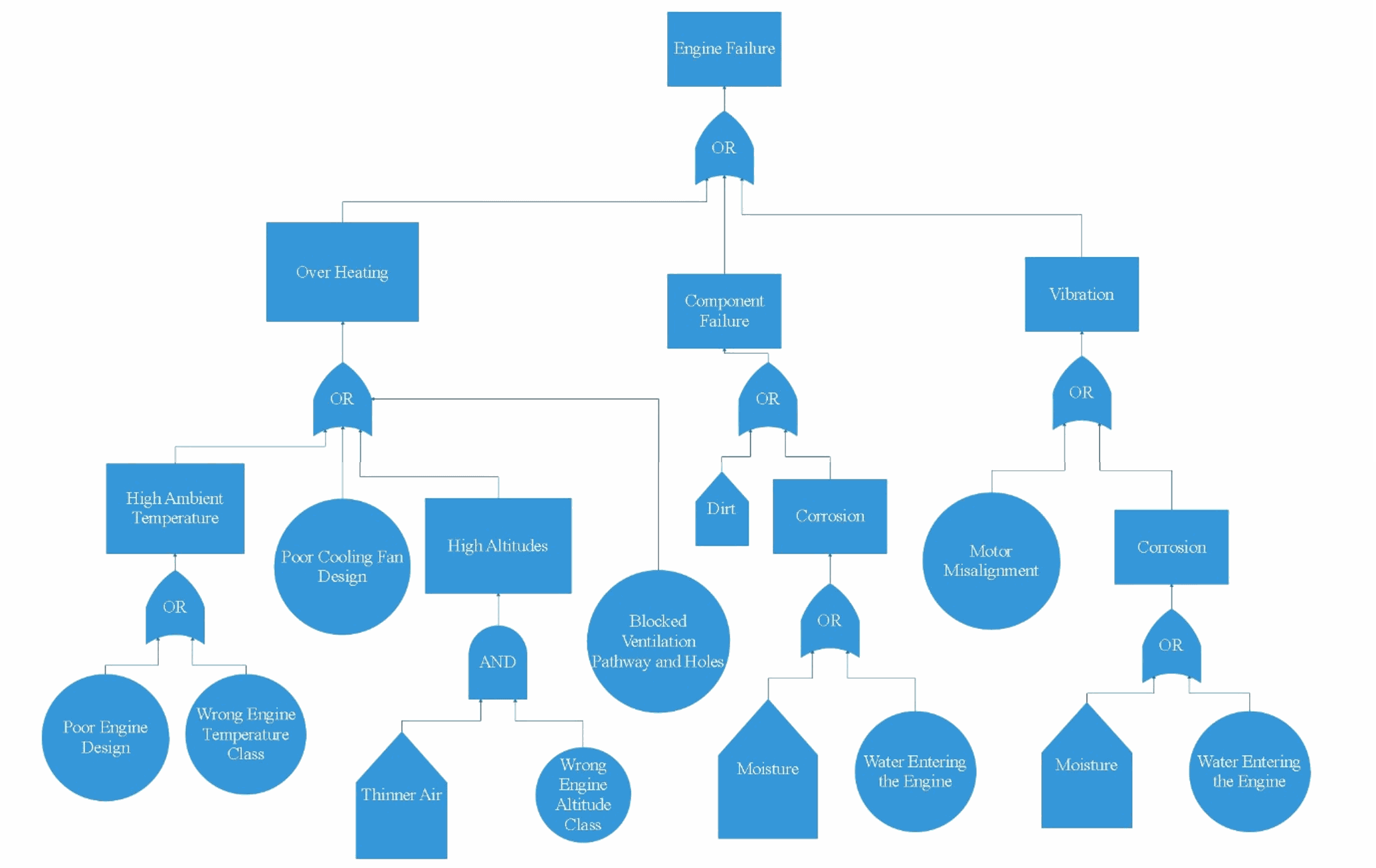
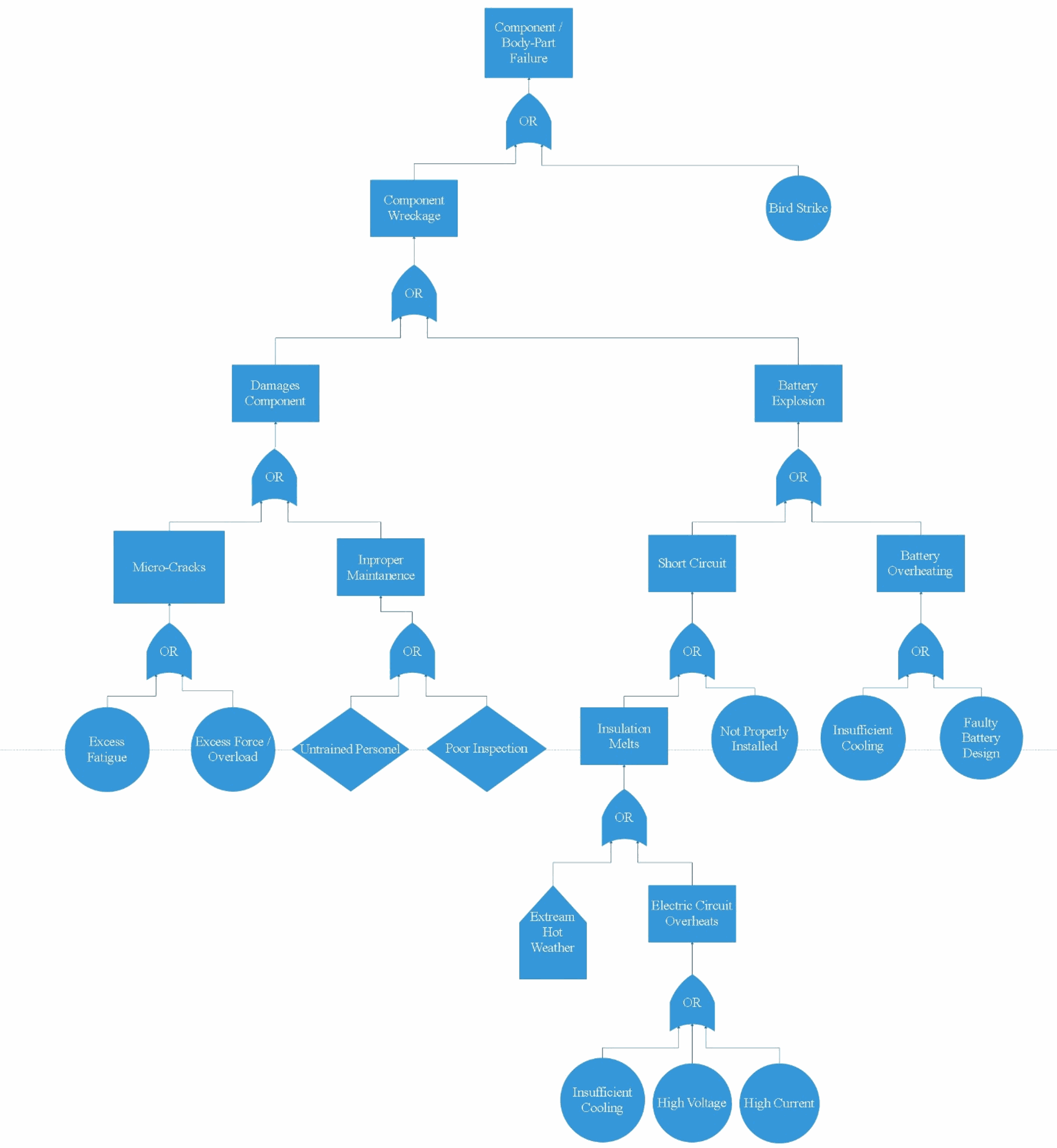
A fault-tree analysis tied it together: the craft only goes down if the parachute fails and another system fails at the same moment.
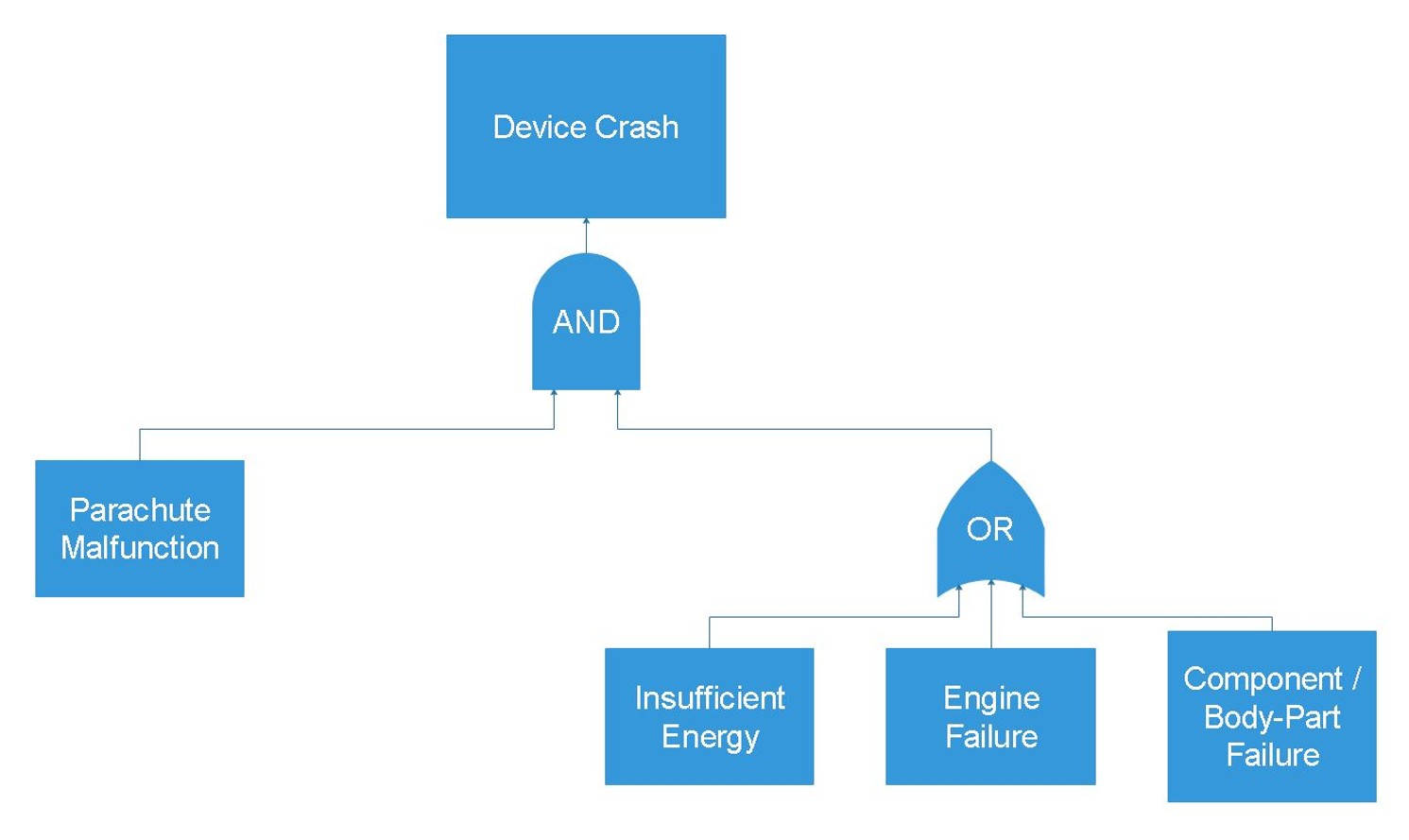
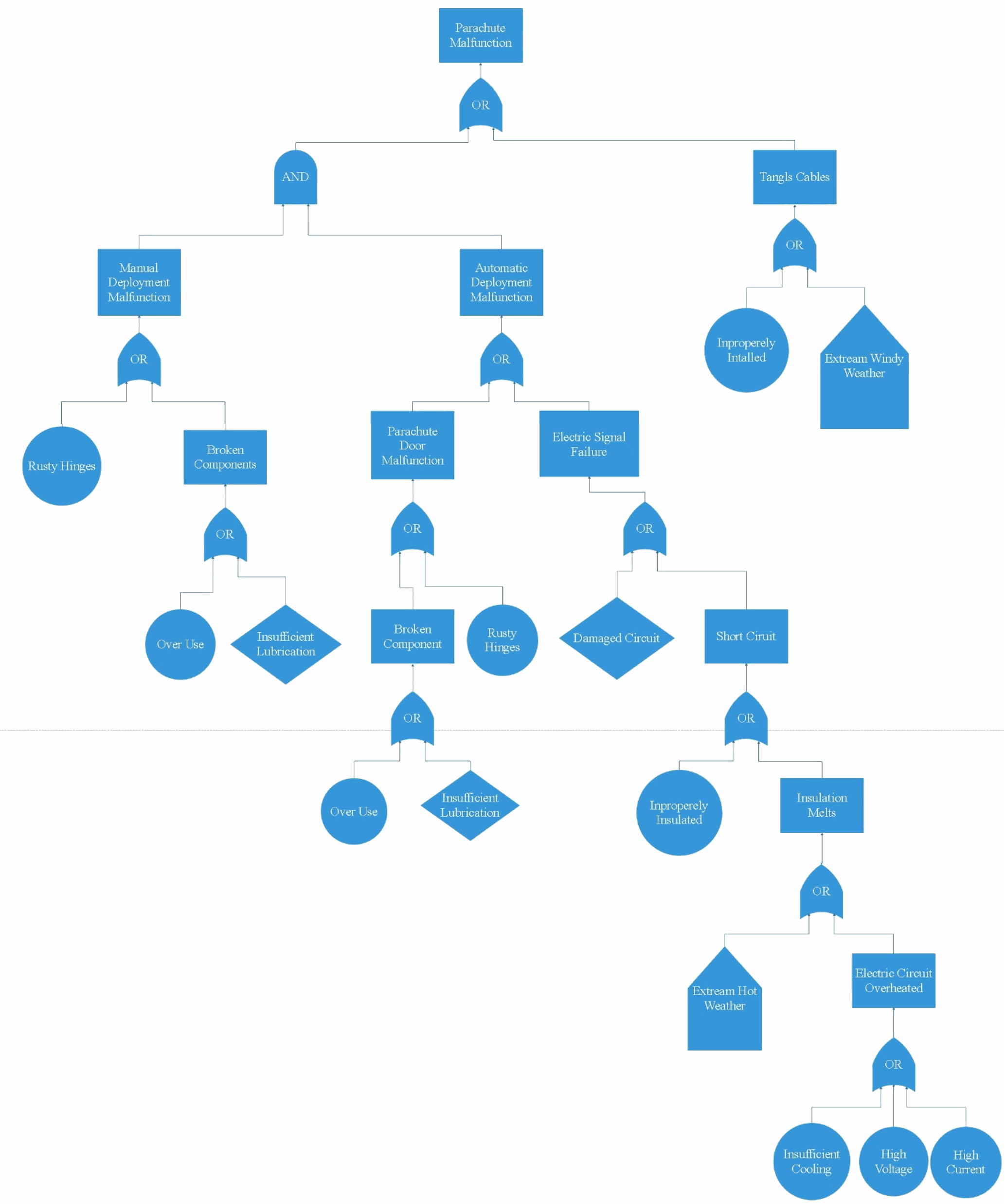
Top-level fault tree: a device crash needs a parachute malfunction AND one of insufficient energy, engine failure or component failure.

The top-level tree, exploded into its four branches below.

Parachute-malfunction fault sub-tree, broken down through deployment and signal failures.
Insufficient-energy fault sub-tree, broken down through charge, battery and solar-cell failures.
Engine-failure fault sub-tree, broken down through overheating, component failure and vibration.
Component and body-part failure fault sub-tree, broken down through weakness and battery explosion.

07 By the numbers

1,003 Total vehicle mass, kg
10,145 Lift required, N
47.77 Lift-off airspeed, m/sover the wings, vs ~73 for aircraft
11° Wing angle of attack

08 Recognition

IMechE Best Project, 2017 Best Project Certificate from the Institution of Mechanical Engineers, awarded for this thesis at the University of Exeter.
The Robert W Flux Award, 2017 Given to the final-year engineering undergraduate with the highest standard in an oral technical presentation, for this dissertation.

Want the full depth: the airflow math, the material selection, the fault-tree analysis?

Read the full thesis (PDF) Preliminary report (PDF)