3D Printing / Mechanical
3D Printed Jet Engine
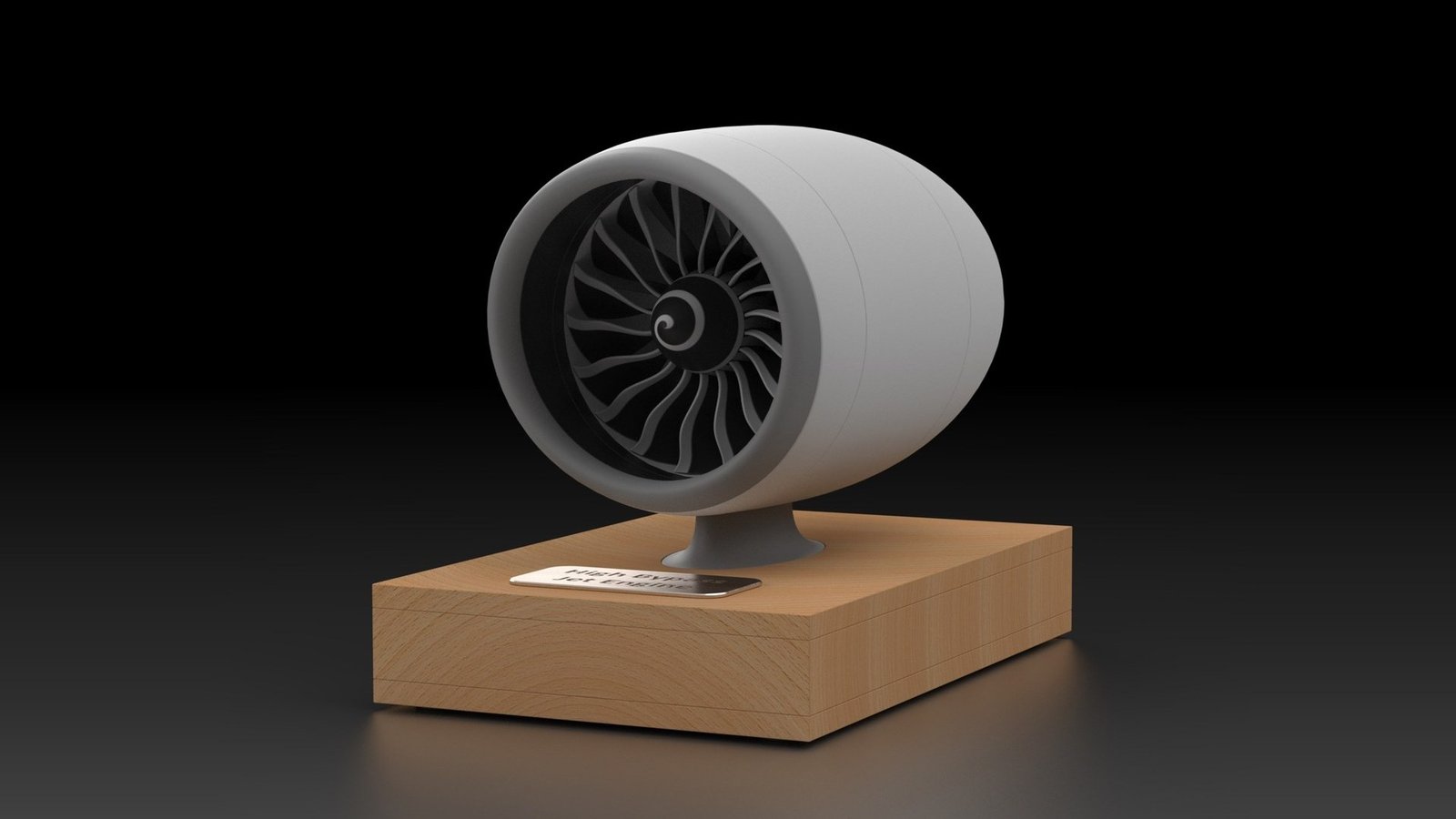
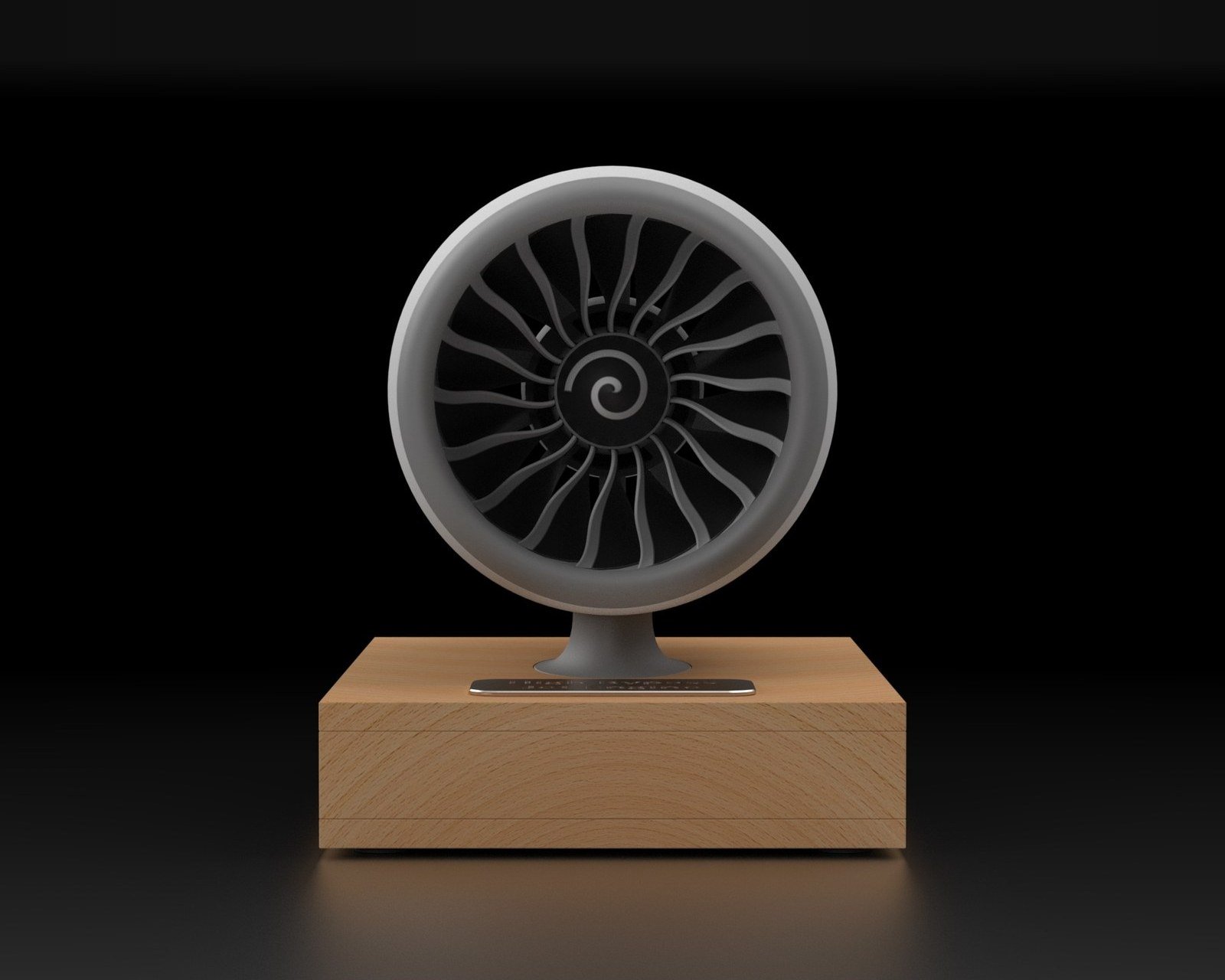
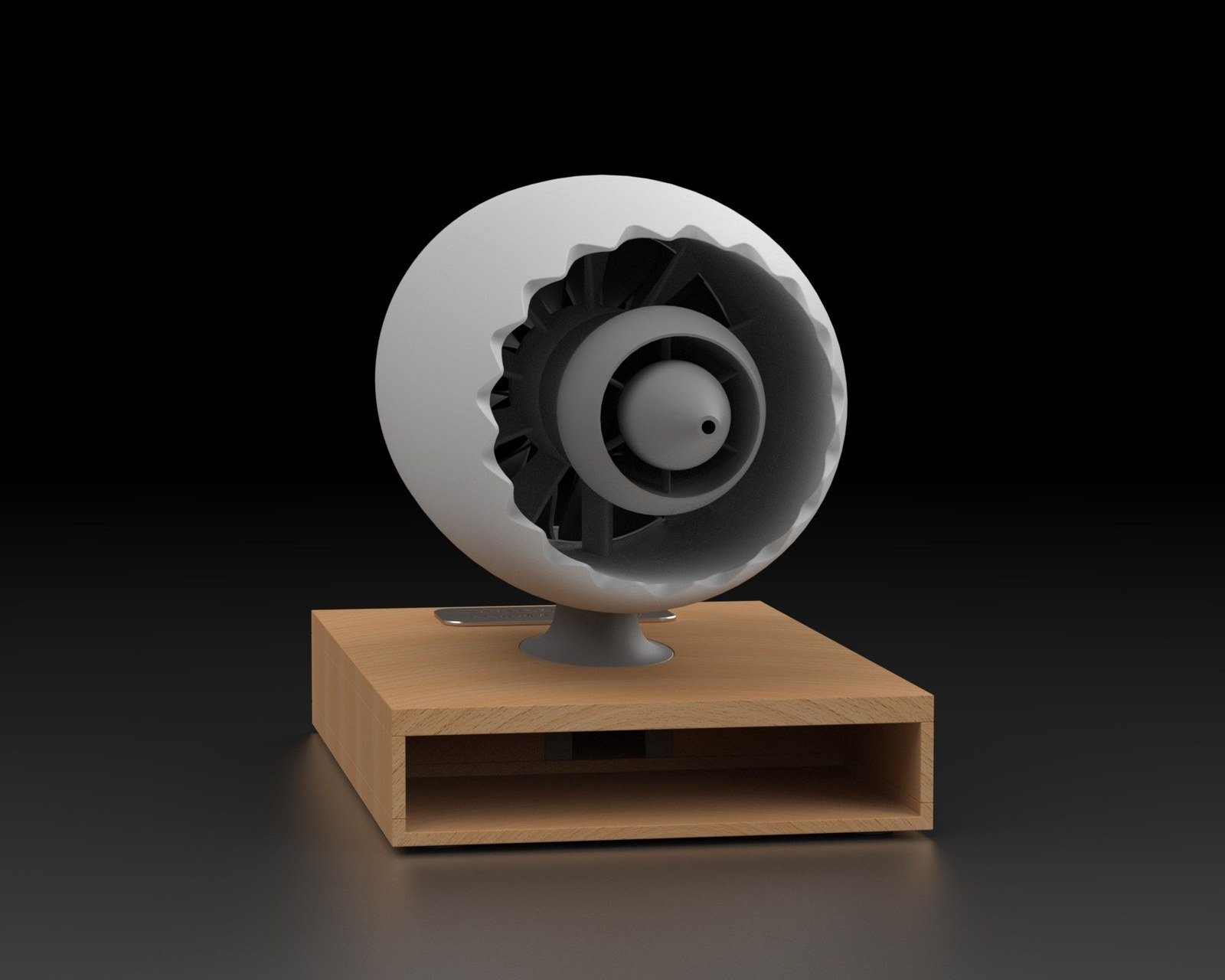
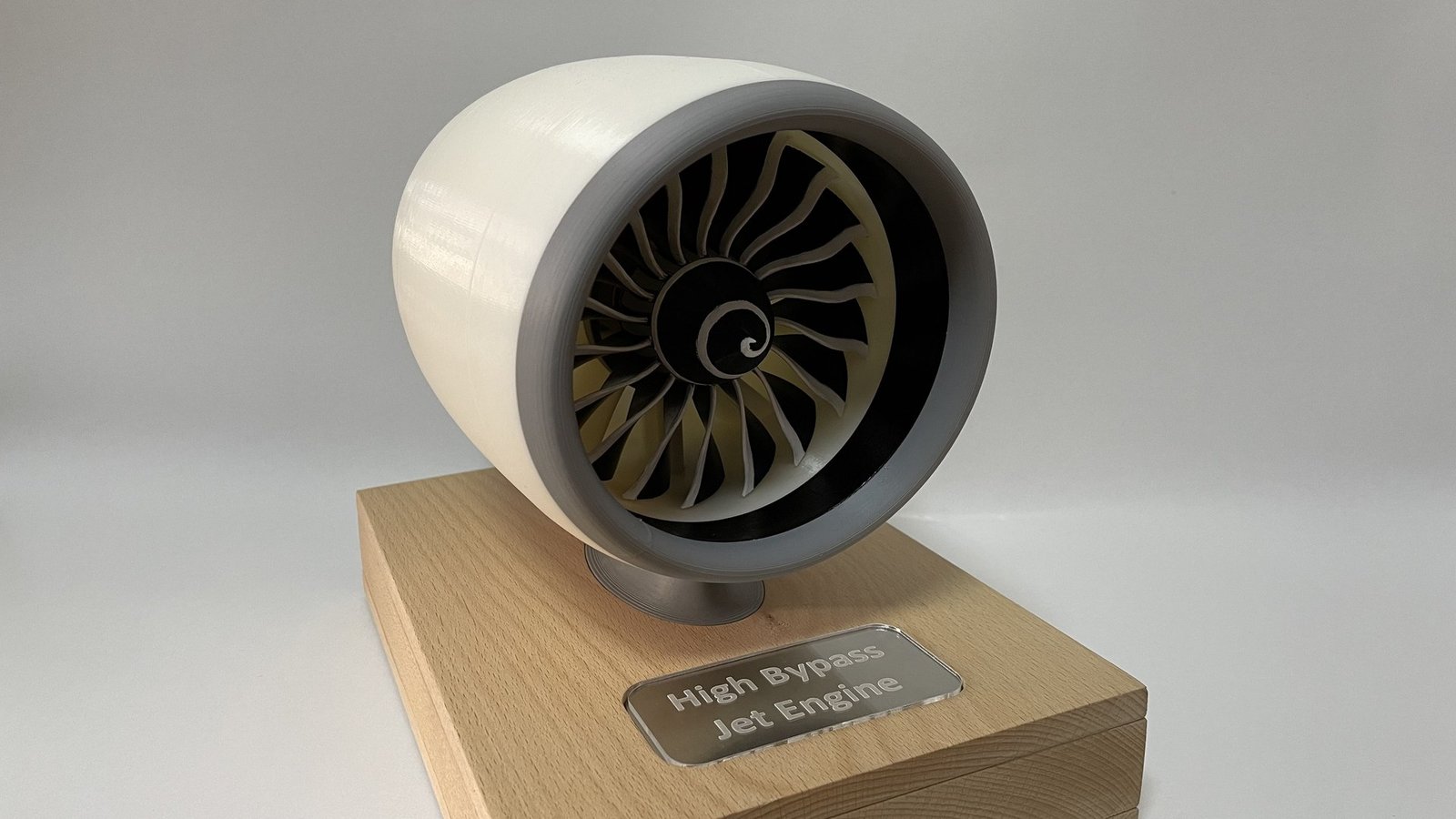
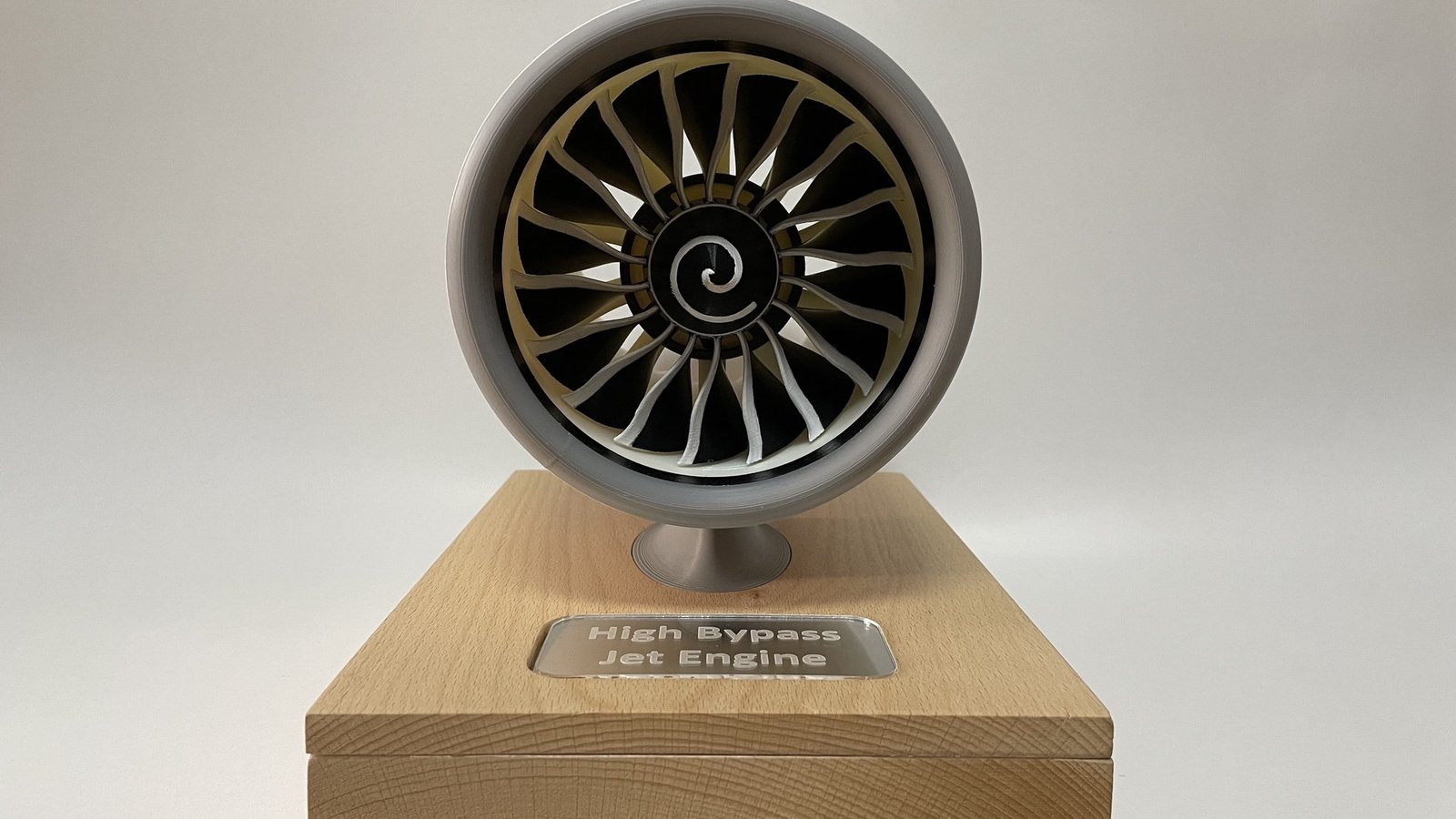
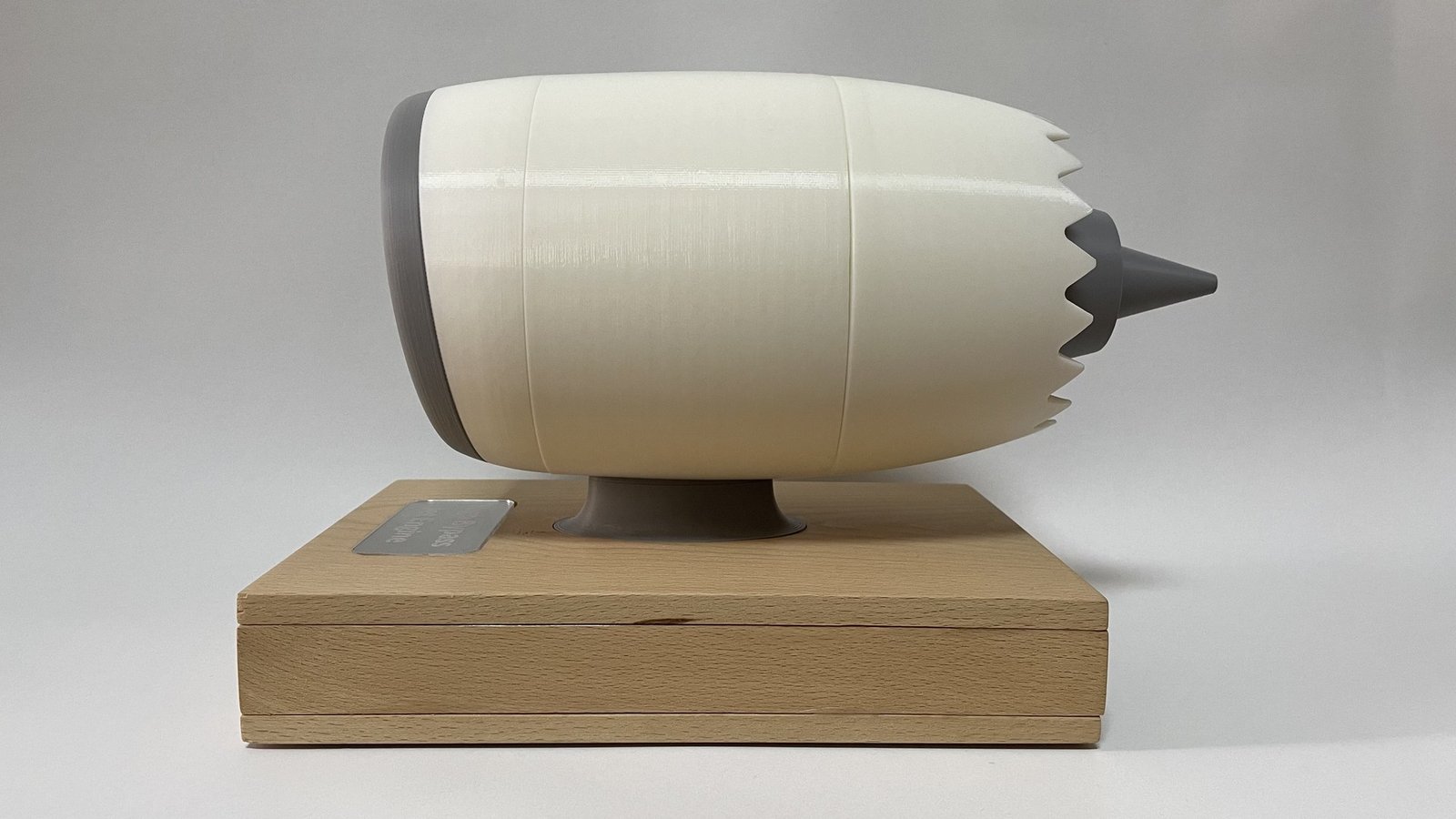
A working model of a high-bypass turbofan, designed in SolidWorks around a brushless motor, then 3D printed, painted and assembled on a CNC-cut wooden base. A servo tester spins the fan up.
A video with no files
It started with an online video of a 3D printed jet engine with a fan that turns. No files came with it, so this one was designed from scratch.
Sized around the motor
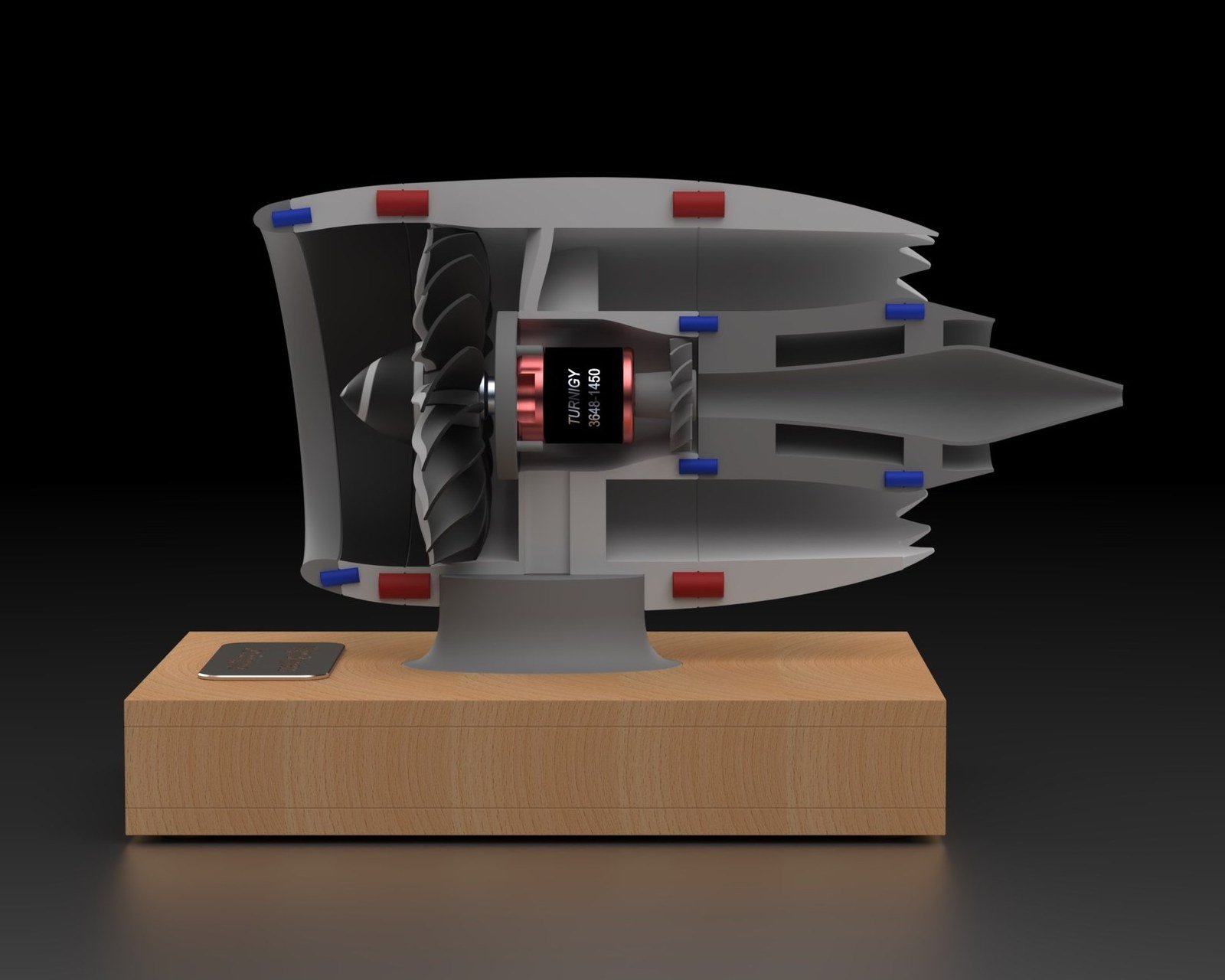
The only hardware on hand was a Turnigy 3648 brushless motor (1450 KV) and its ESC, so the engine was built around them. The motor was modelled in SolidWorks and placed first, and a master 2D sketch drawn over it fixed the engine's size and proportions.
Every part was then designed off that sketch, to look right and stay in proportion with the rest.
No clearances, then clearances
The first design has no clearances: 16 parts and an assembly that fit perfectly on screen, with nothing allowed for how a printer makes them.
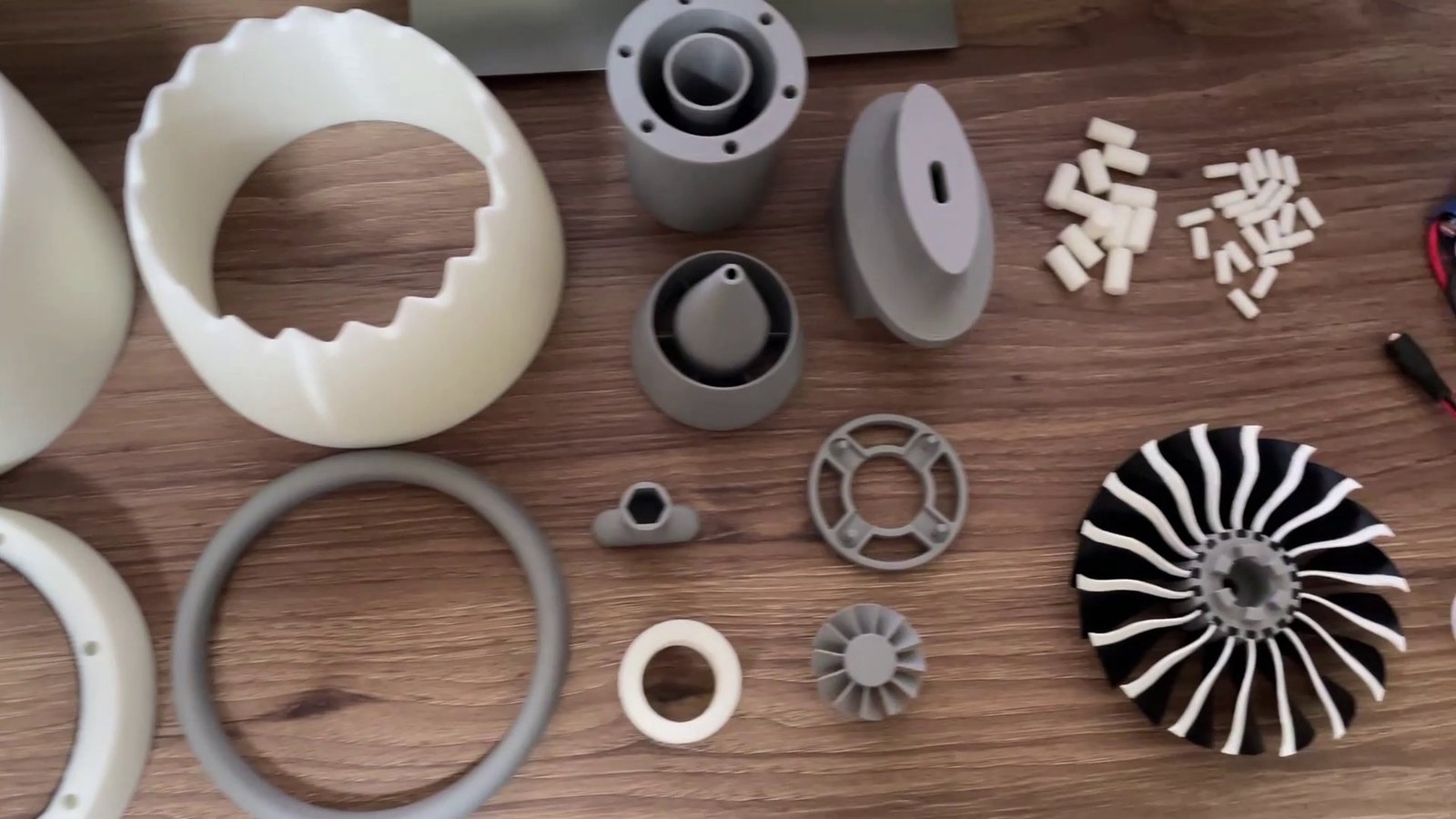
Once a Creality Ender-3 S1 Pro was bought, test parts and shapes were printed to find how tight a fit it could hold, and the clearances were set from the results. The print-ready set has 14 part designs; the motor and the wooden stand stay out of it.
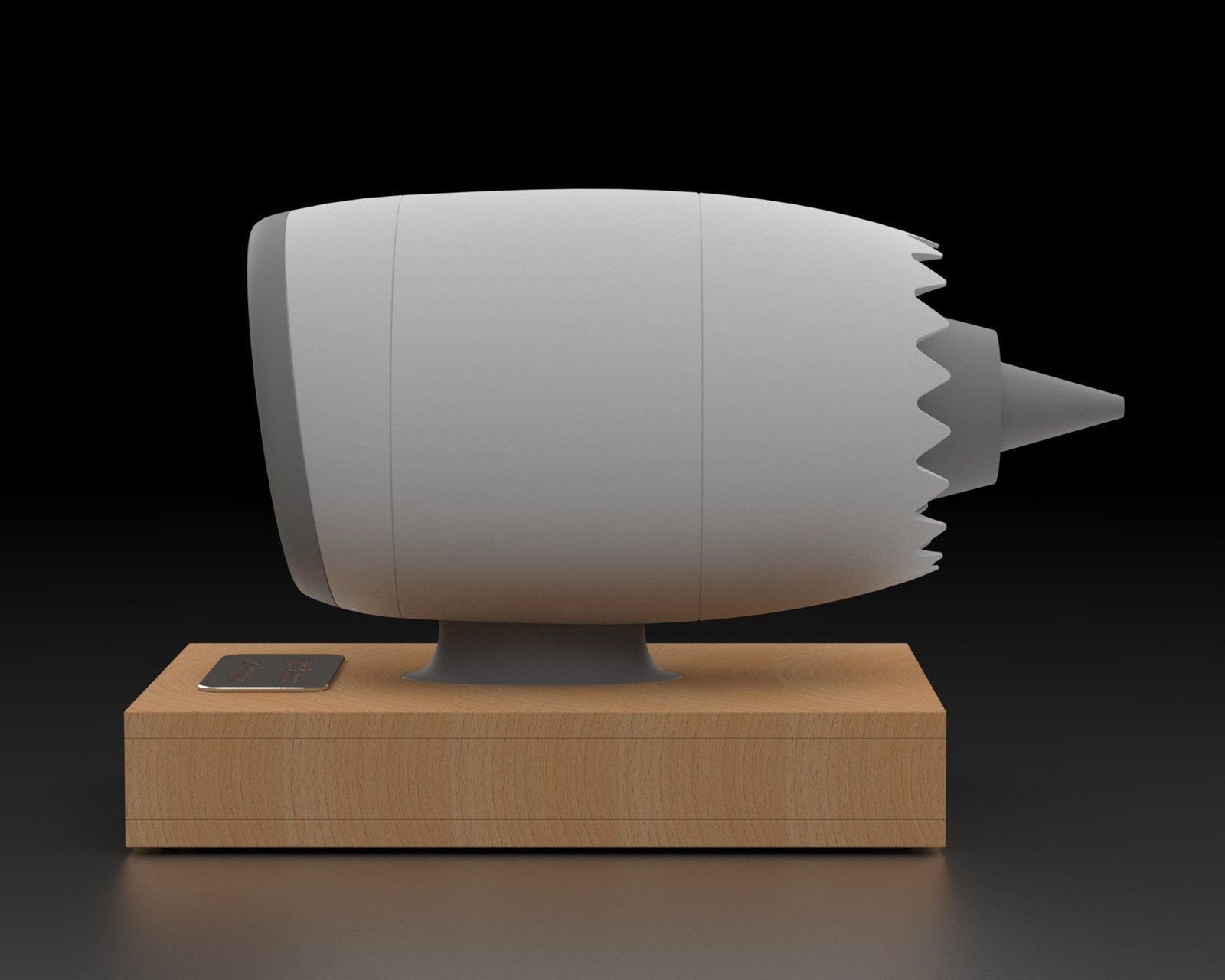
Every part is kept at each stage:
- CAD. 14 SolidWorks parts, each marked print ready.
- STL. 14 meshes exported from the CAD.
- Slicer. 14 slicer projects set up for the Ender-3 S1 Pro.
- G-code. 14 files the printer runs.
The print log
One text file tracks the whole print: the settings, the clearances including the two that came out too loose, and the mass and time for every part by colour.
Printer: Creality Ender-3 S1 Pro (Code: M420 S1 Z10 ;Printer uses bed mesh)
Filament: CR Series 3D Printing Filaments (Diameter = 1.75mm)
Colors Used: White / Black / Grey

================================================================================

• Print Parameters:                  • Tolerances:
  - Layer Height: 0.2mm                - Pins & pin holes: 0.25mm (Too Loose)
  - Infill: 30%                        - All depth of all holes: 1mm (Pin Length Shortened)
  - Adhesion: Skirt                    - Fan blades to fan disk: 0.25mm (Too Loose)
  - Shell: 3 Layers                    - Fan disk to motor hub: 0.25mm
  - Nozzle Temp: 200C                  - Motor cooling fan to motor: 0.1mm
  - Bed Temp: 60C

================================================================================

Mass Required:
• Black: (Total Mass = 69g)
         (Total Time = 14h:24m)
  ------------------------------------
  - Spinner Cone  (-15g) (01h:48m)
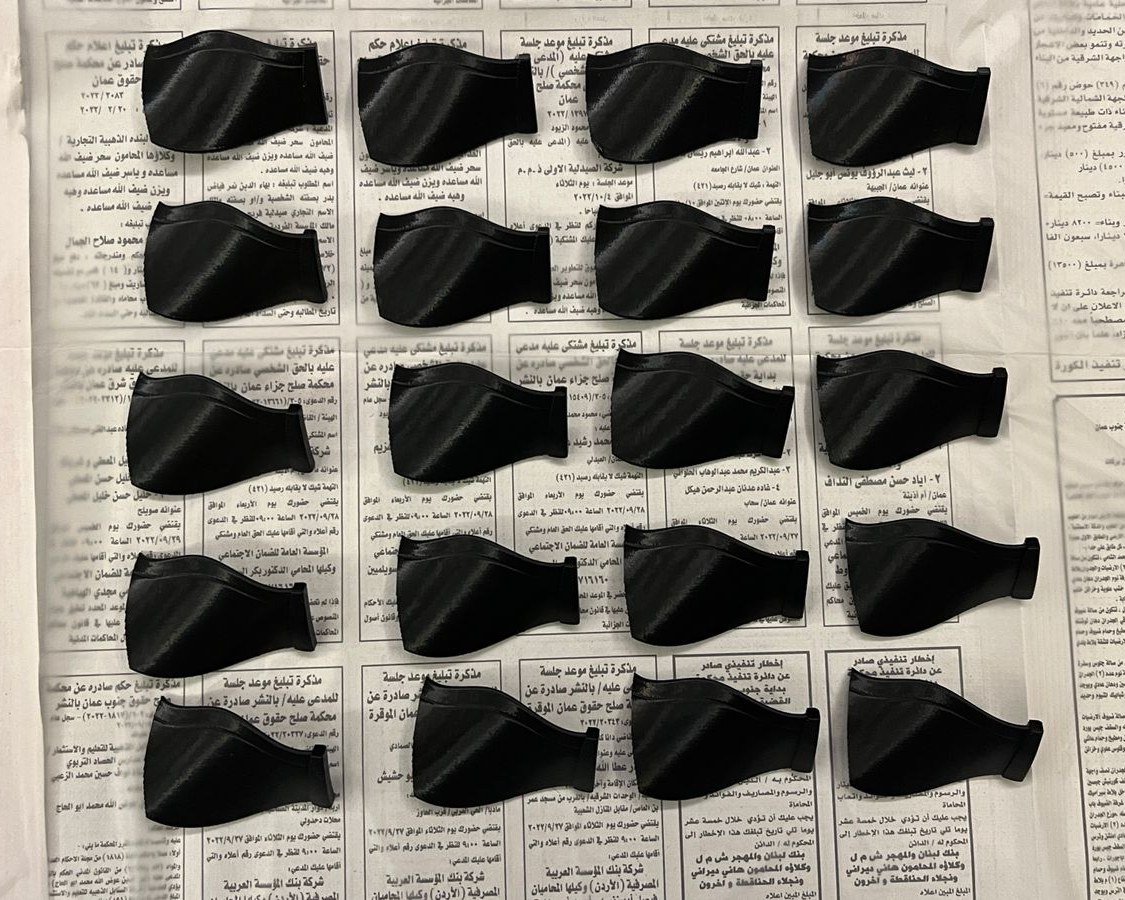
  - Fan Blade     (-54g) (12h:36m) X18

========================================

• White: (Total Mass = 1075g)
         (Total Time = 118h:04m)
 ----------------------------------
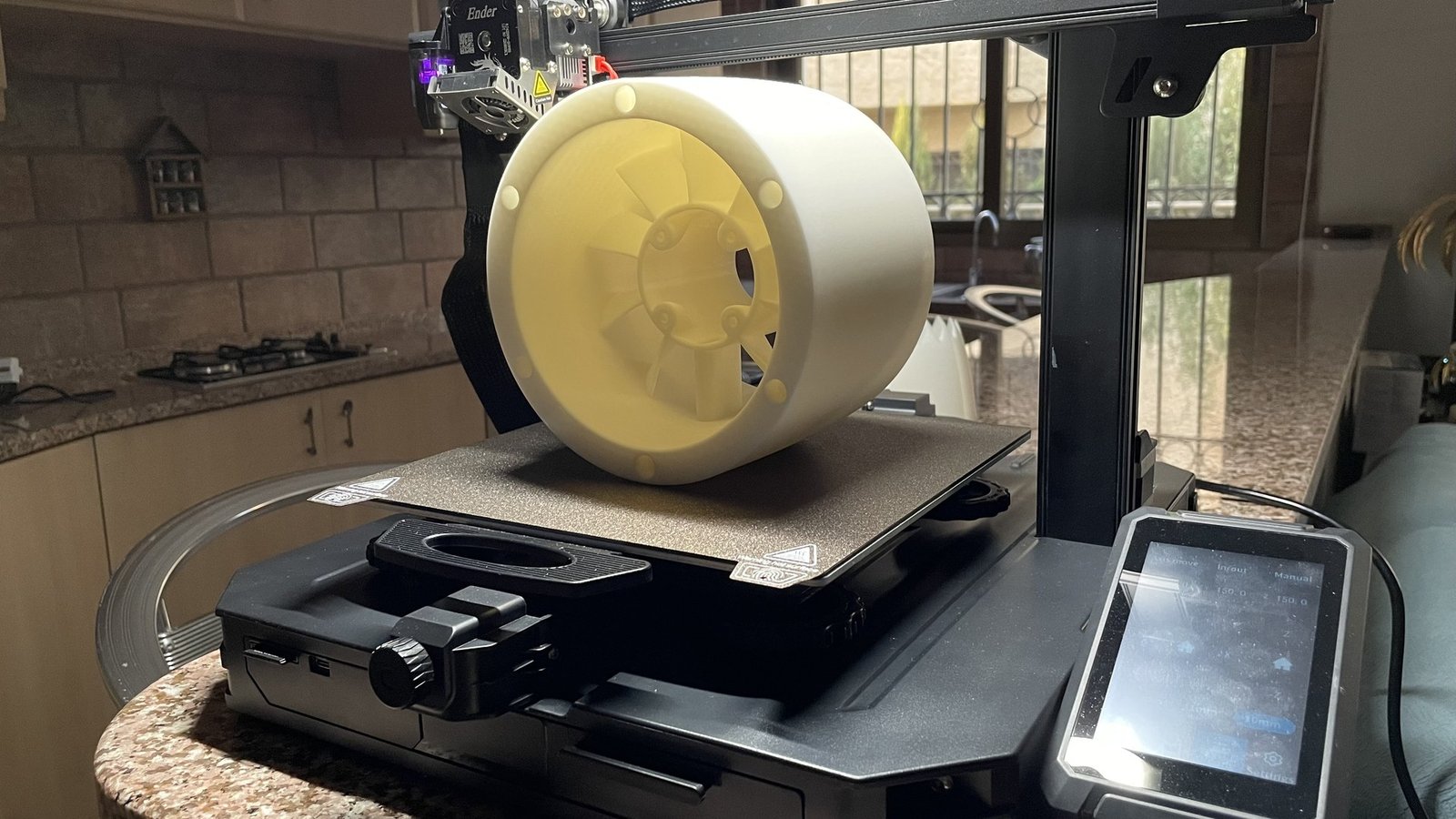
  - Front Body (127g) (14h:11m)
  - Main Body  (650g) (71h:12m)
  - Back Body  (269g) (28h:03m)
  - Large Pin  (-20g) (03h:03m) X12
  - Small Pin  (--9g) (01h:35m) X22

========================================

• Grey: (Total Mass = 361g)
        (Total Time = 45h:28m)
  --------------------------------------
  - Front Body Tip      (-44g) (05h:23m)
  - Fan Disk            (-19g) (03h:03m)
  - Motor Support Cover (-11g) (01h:44m)
  - Motor Cooling Fan   (--9g) (01h:27m)
  - Front Exhaust       (107g) (12h:51m)
  - Back Exhaust        (-46g) (06h:16m)
  - Engine Support      (125g) (14h:44m)
Printing
Every part is printed in 1.75 mm filament at 0.2 mm layers, 30% infill and three shells, with the nozzle at 200 °C and the bed at 60 °C. The main body is the largest single print: 650 g over 71 h 12 min.
Painting
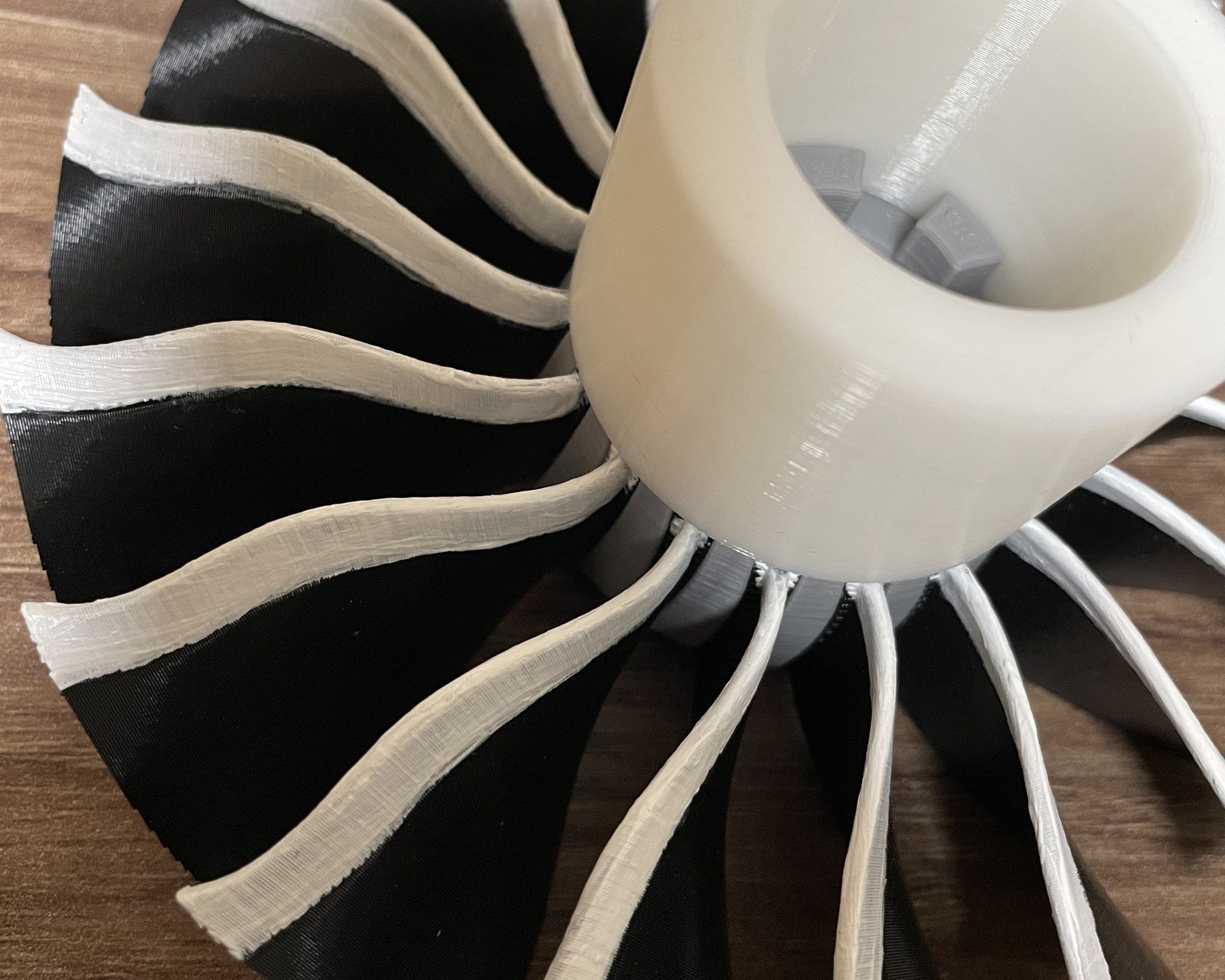
The 18 fan blades come off the printer black, then get white painted edges.
The plaque and the base
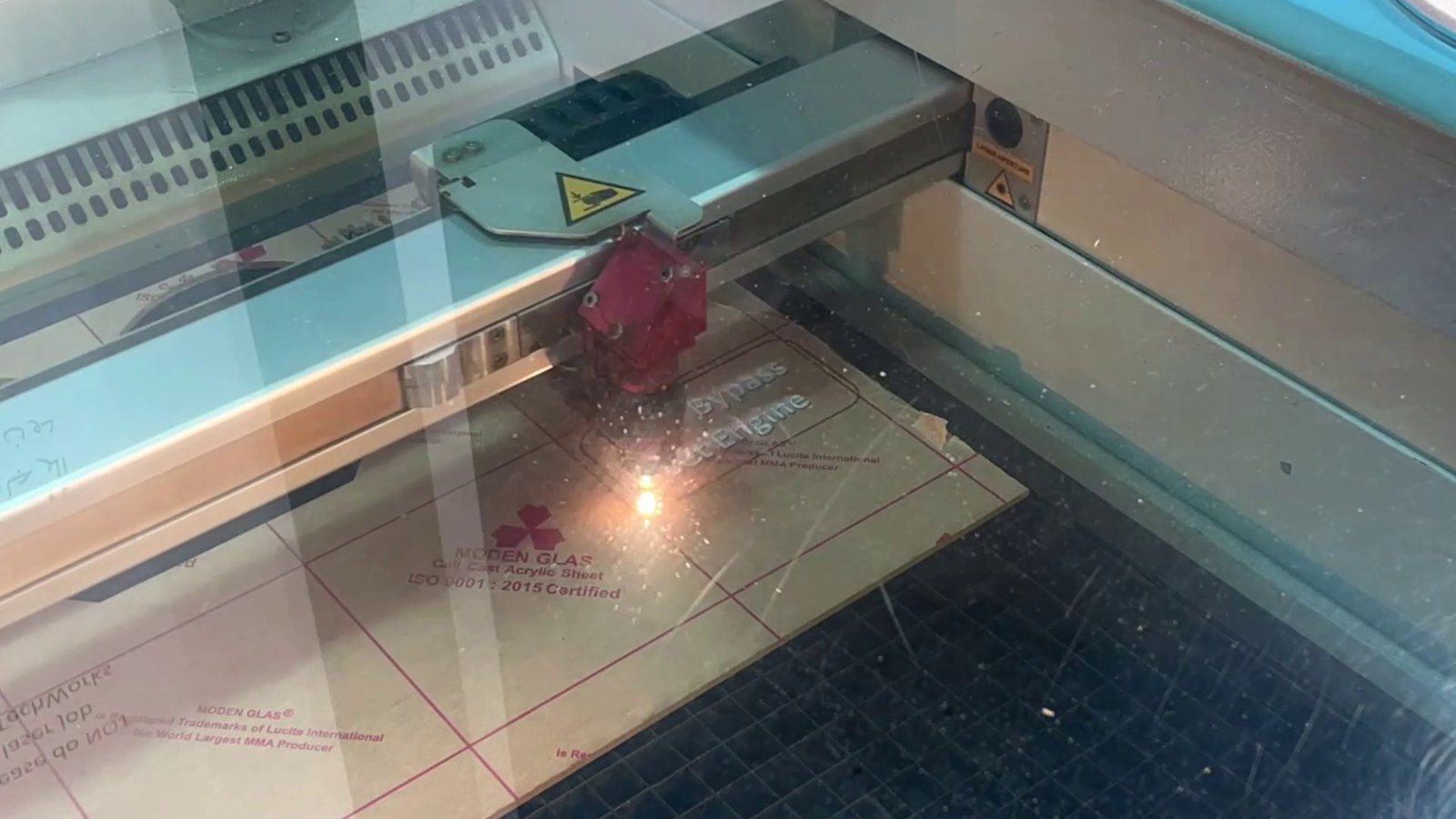
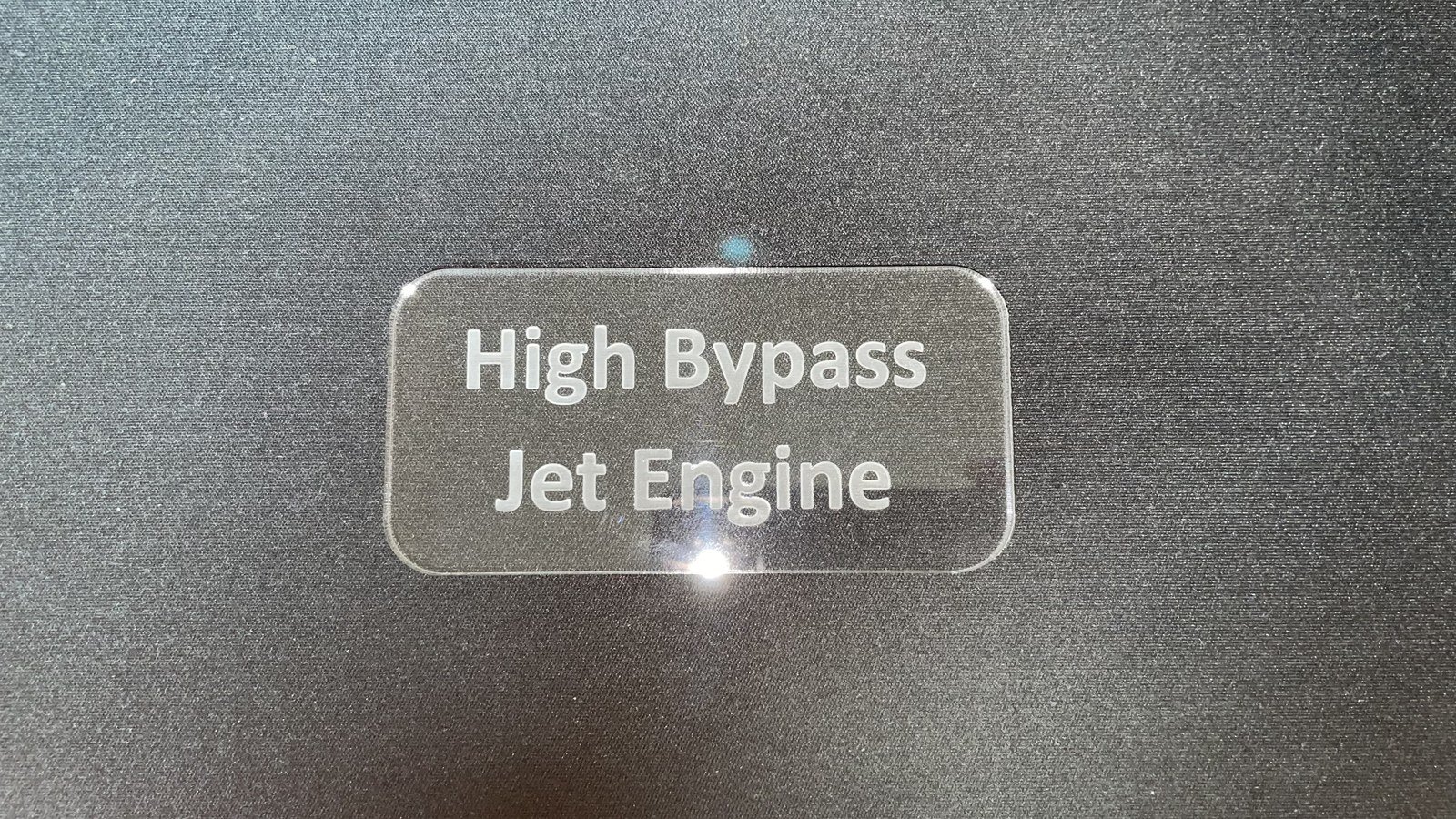
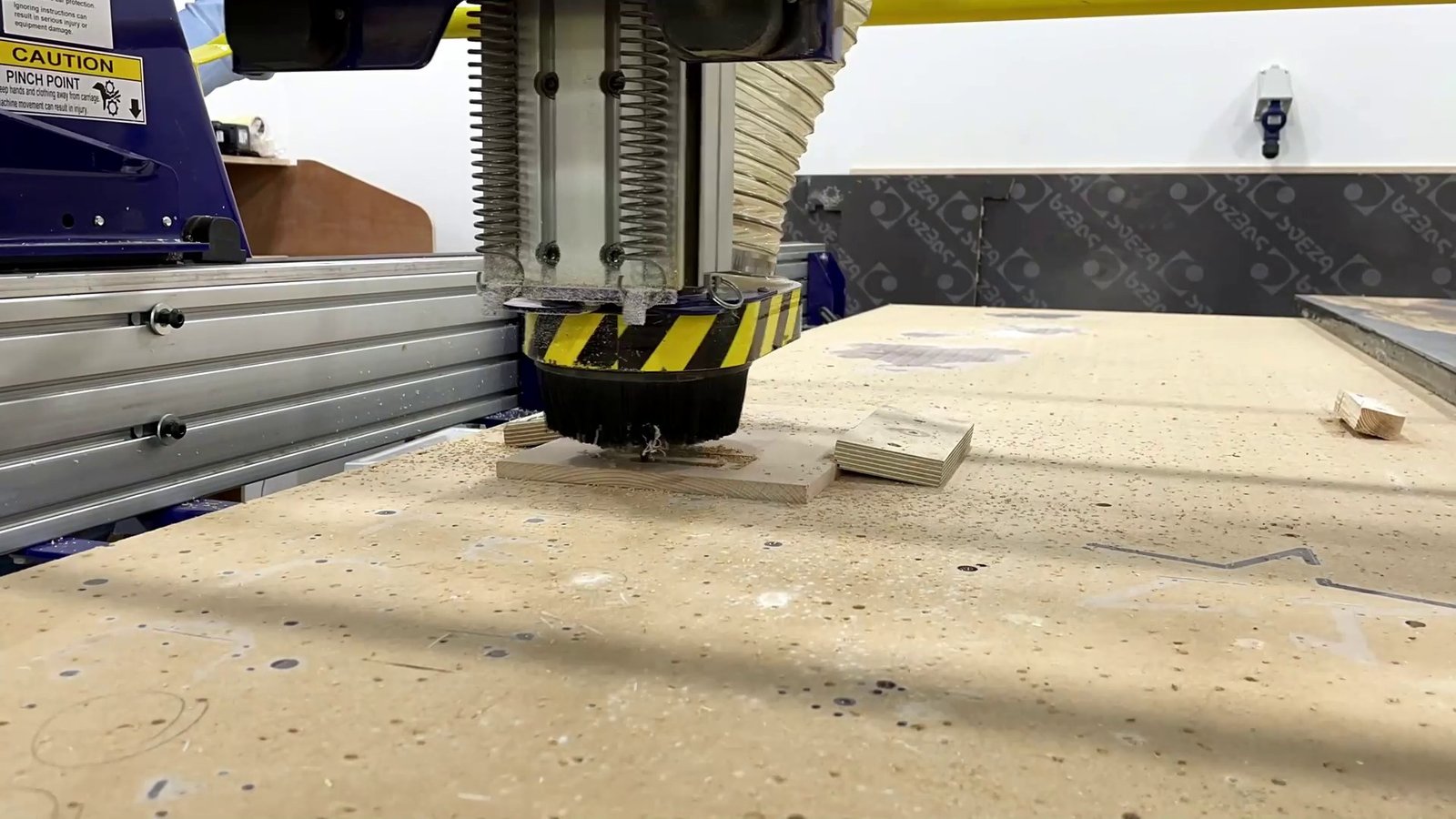
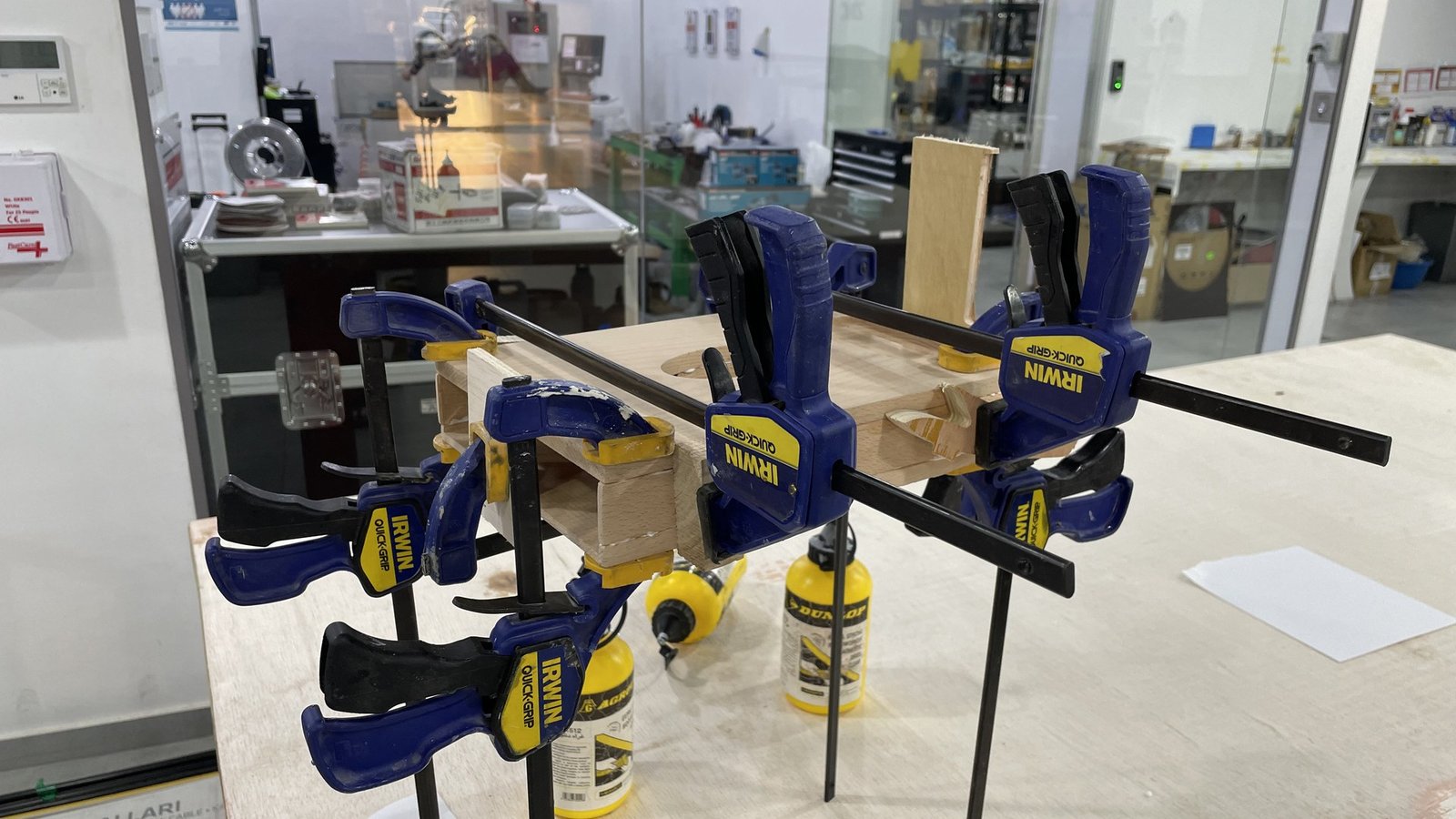
The name plaque is laser cut and engraved in clear acrylic, reading High Bypass Jet Engine. The wooden base is cut on a CNC router, then glued and clamped.
Assembly
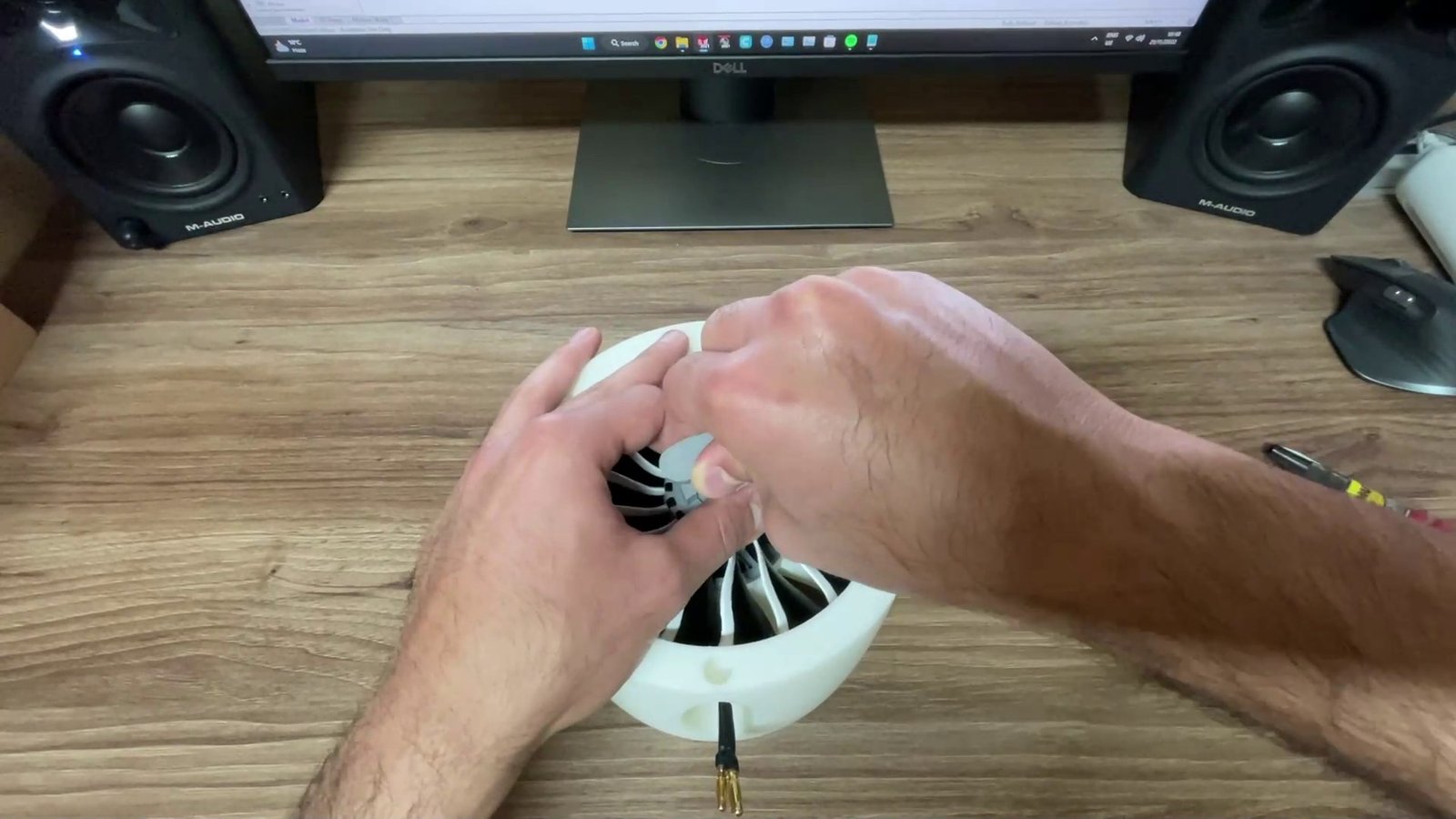
Assembly is where the clearances met the real parts: one pin jammed in its hole, down to the printer's tolerances.
It runs
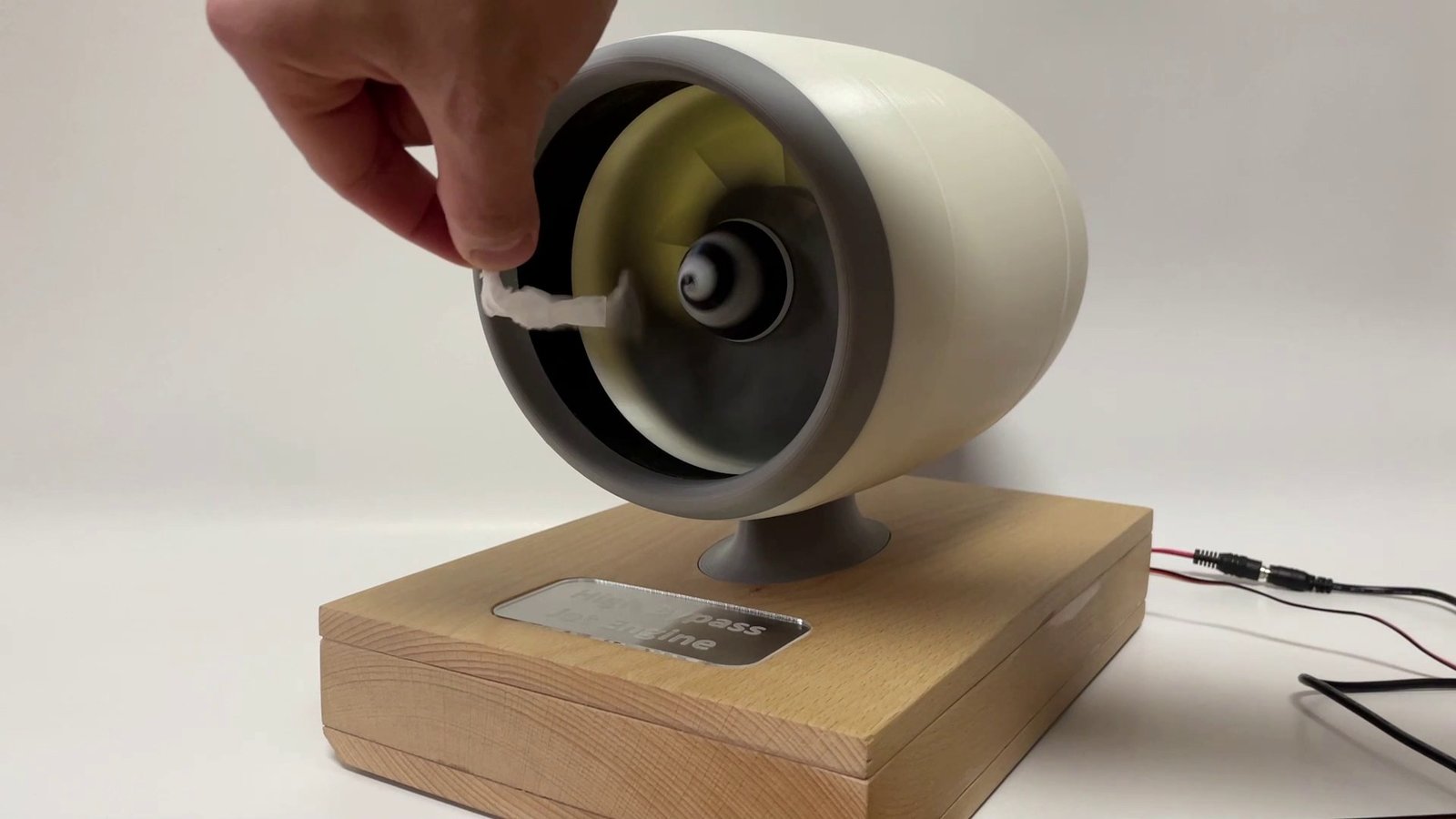
No Arduino: a servo tester drives the ESC and spools the motor up. The fan spins fast and pulls a lot of air, enough to drag a tissue held at the intake toward the blades.
The build film
About eight weeks of work, start to finish.