Mechanical / Electrical Design
Self-Checkout Cart Mount
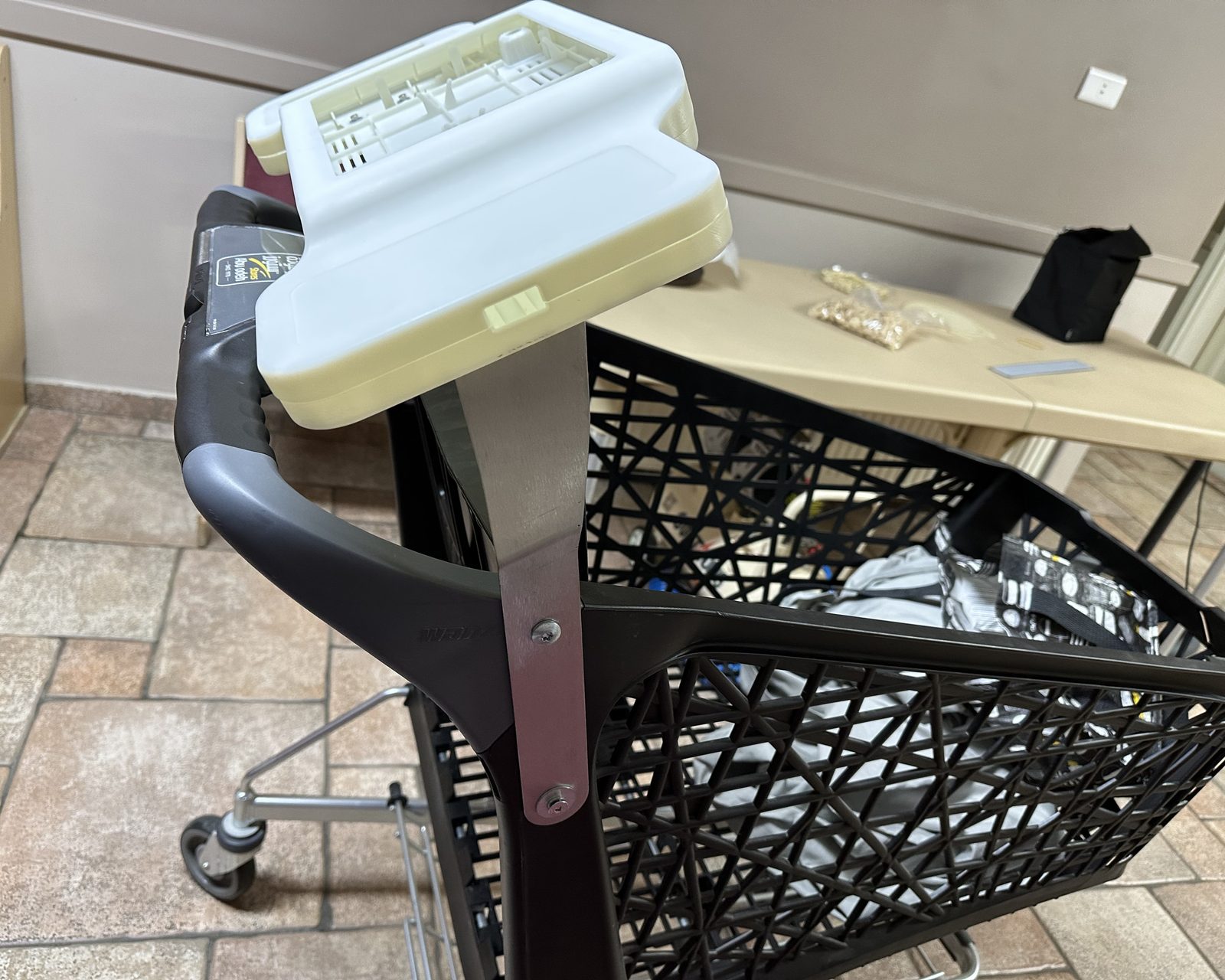
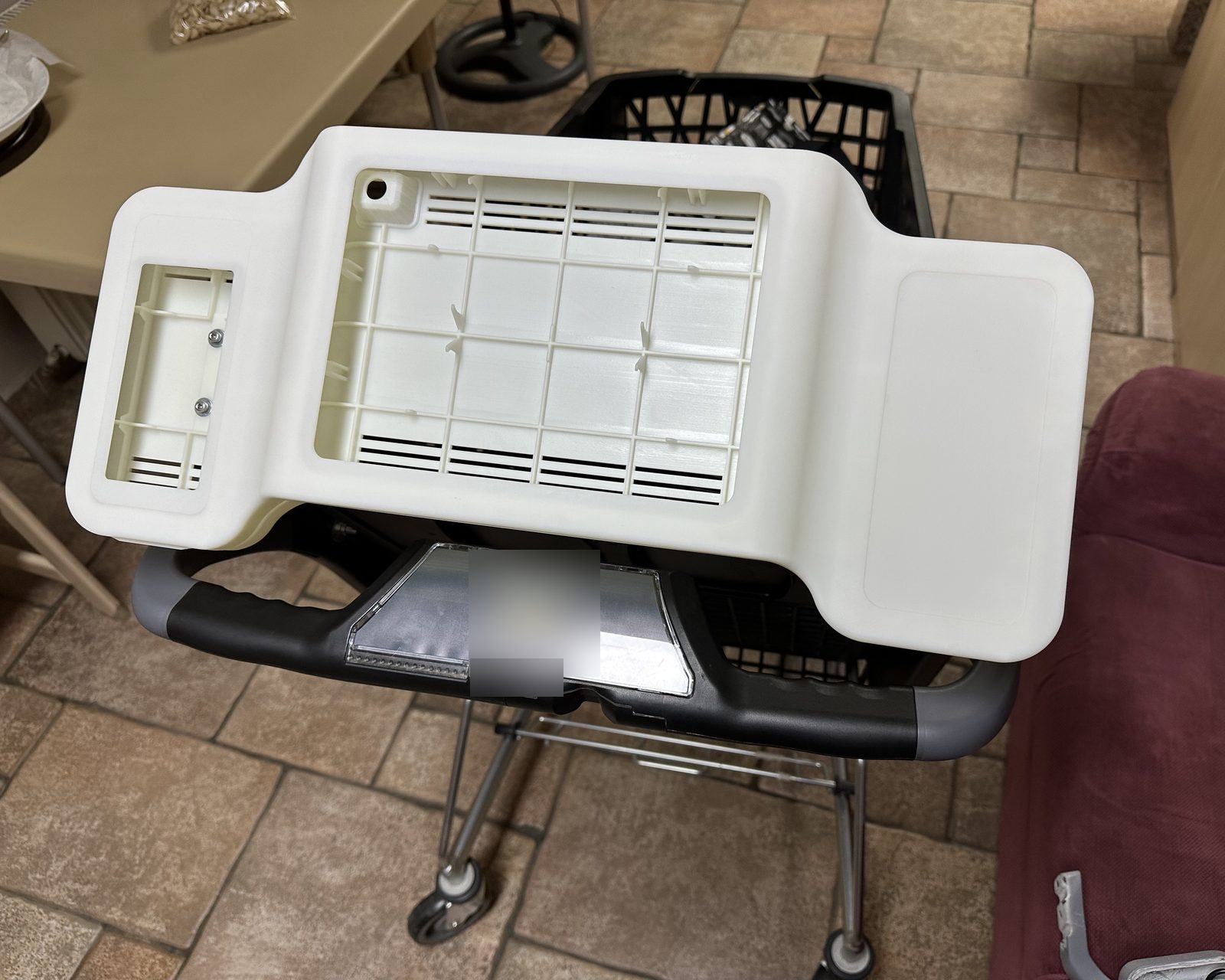
Wowly is a self-checkout device that clips onto a shopping cart, letting shoppers scan and pay their way around the store. It arrived as a fixed CAD model with one hard rule: the device could not change. The brief was to get it onto a cart and keep it there: designing, manufacturing, and assembling the mounting hardware that fixes the device rigidly to a standard trolley, working through the electrical and battery integration along the way, and proving the whole unit on a working first prototype, the one going in front of real shoppers.
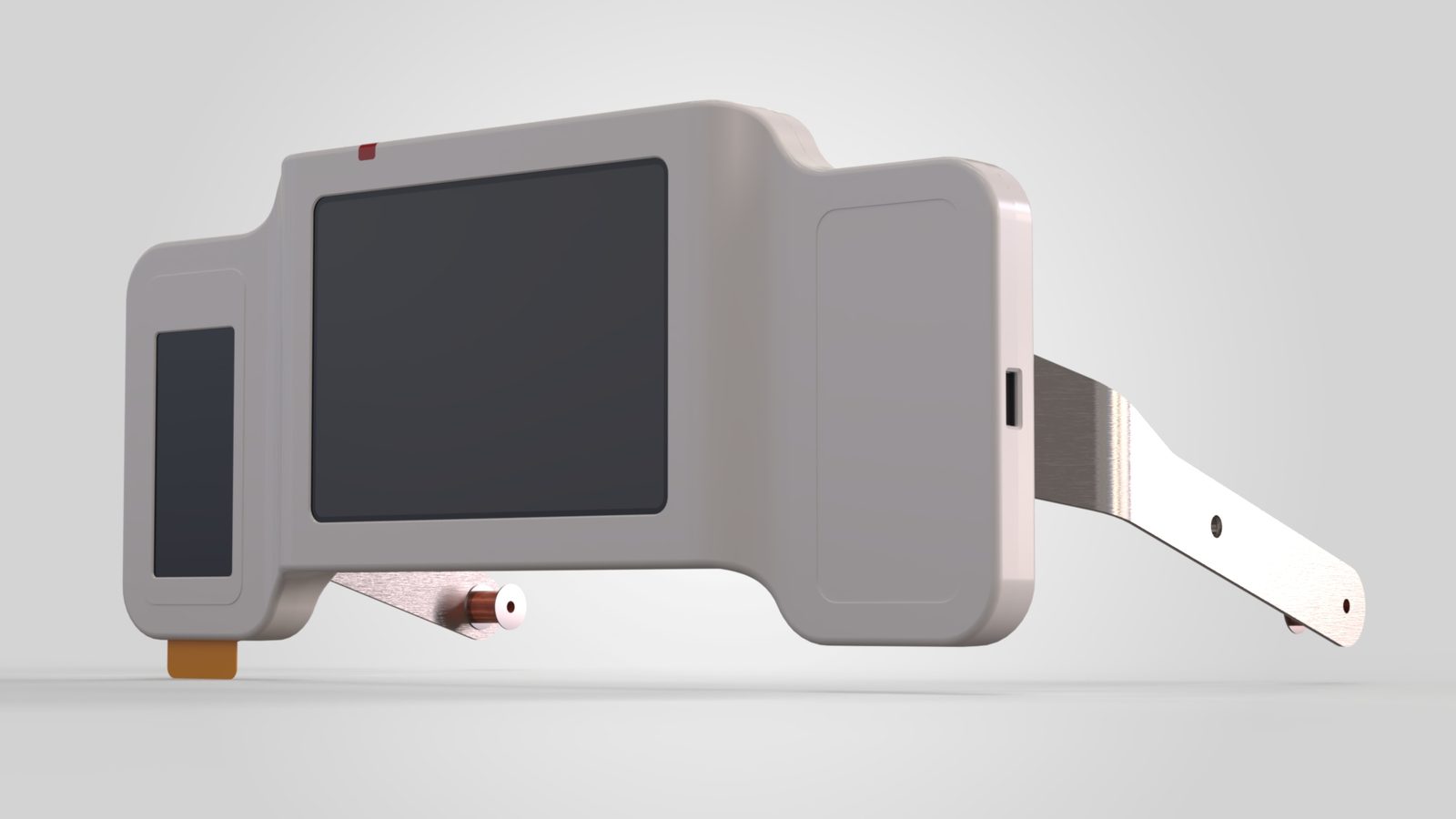
A device, a cart, and the bracket between them
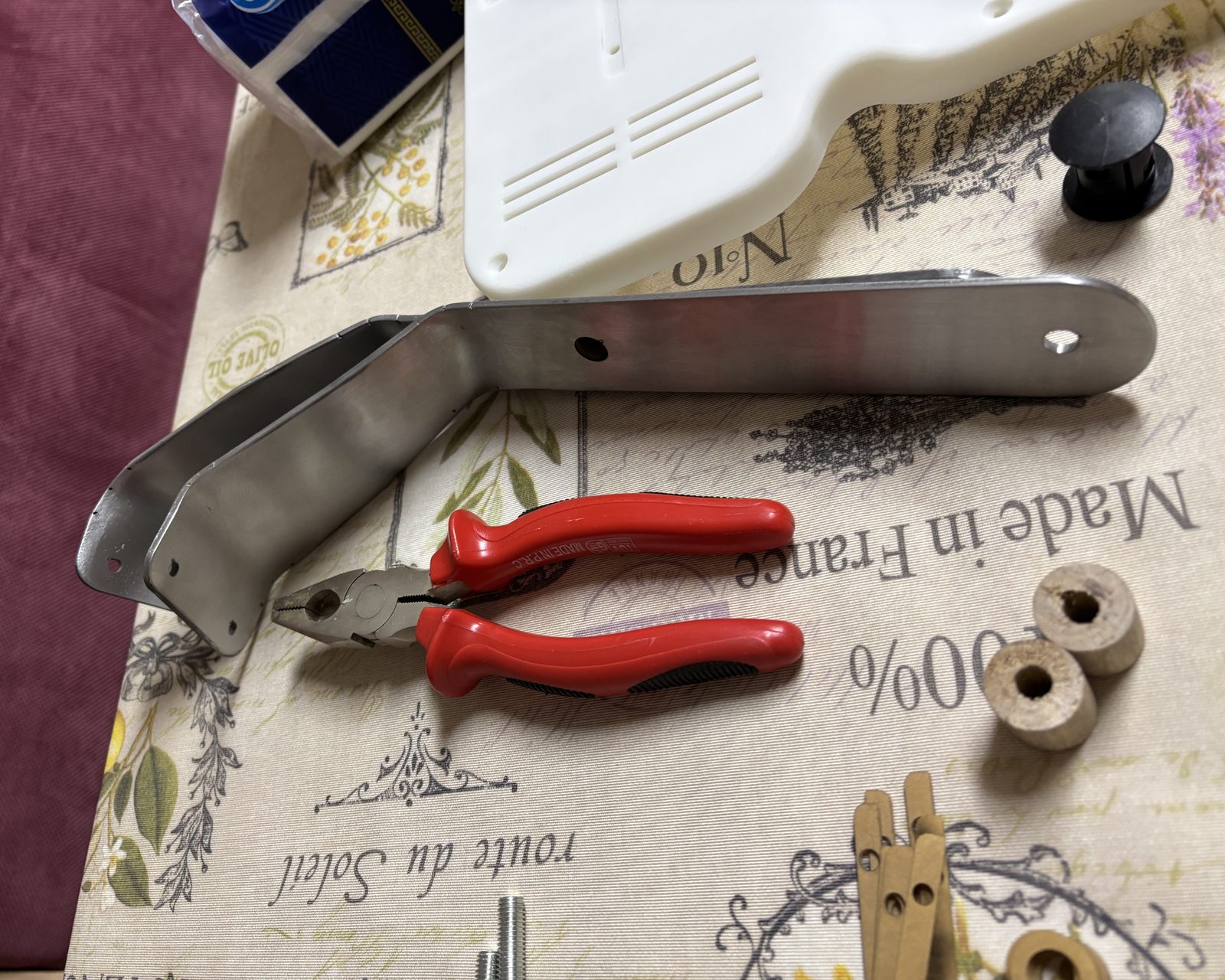
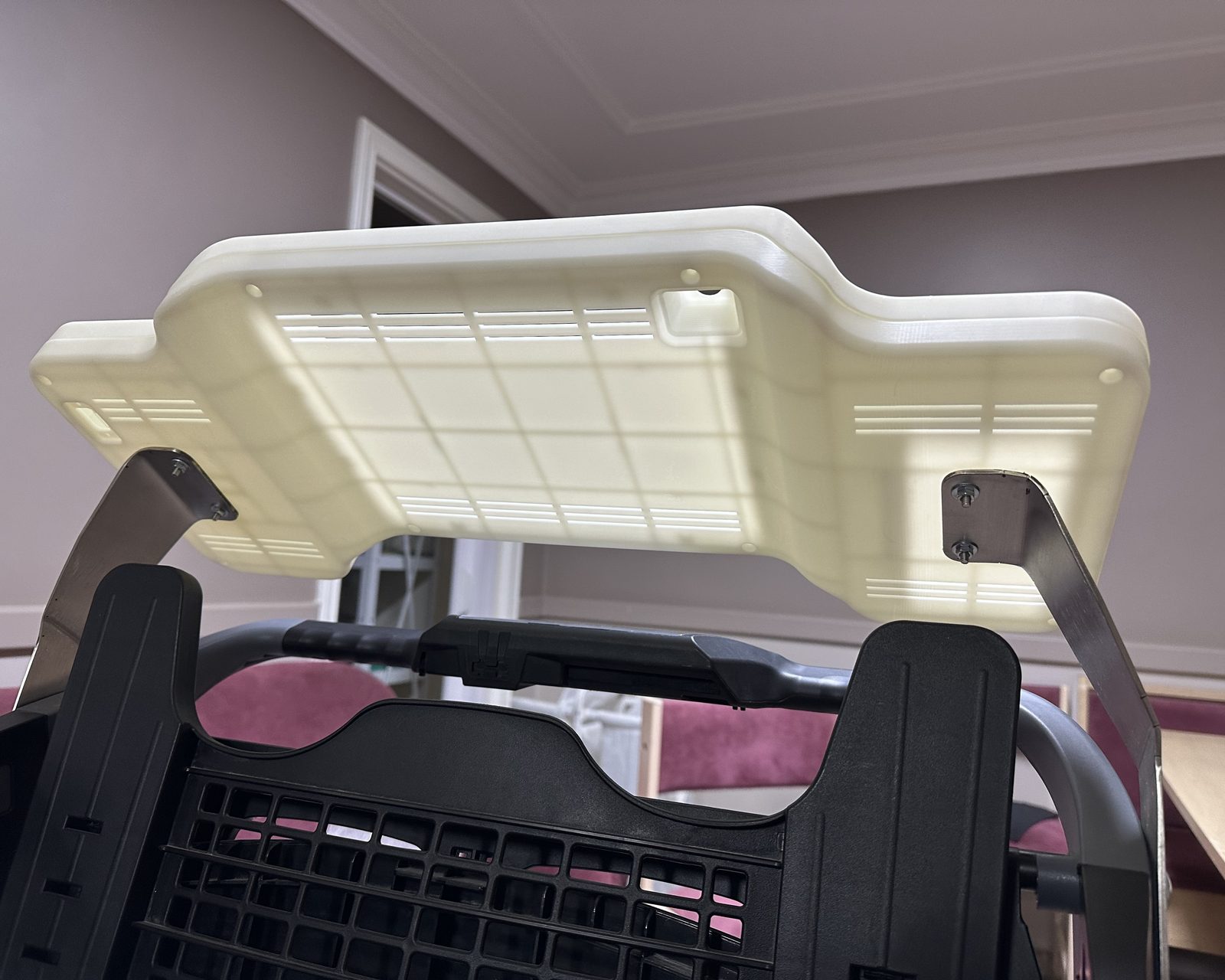
The device geometry was frozen and the cart was an off-the-shelf supermarket trolley. Everything still to be designed sat in between: a set of holding brackets that clamped the device tight enough to survive a full shop, without changing a thing on the device or the cart.
It also had to stay safe in a shopper's hands for a long stint at a time. Every bracket, fastener, and extra part was built around the geometry it was handed, fitted to it exactly instead of reshaping it to make the mount easier.
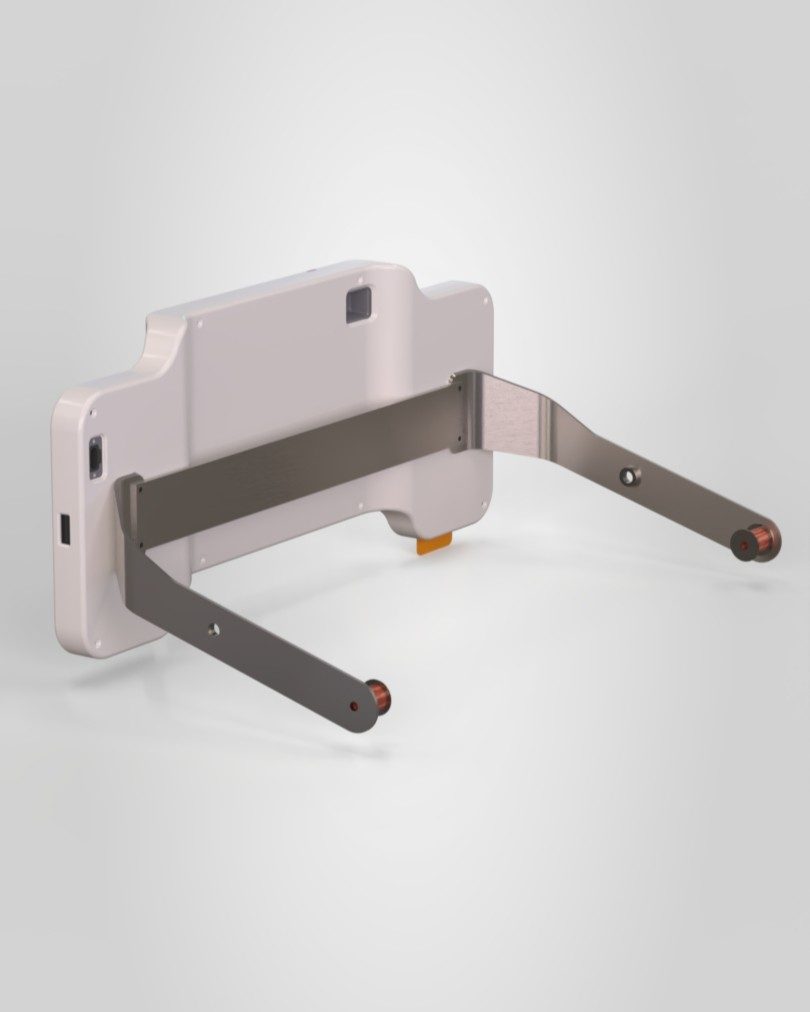
From brief to first prototype
The job ran through four phases, brief to built.
- Brief. Take in the fixed device model, the target cart, and the operating requirements: a rigid mount, safe for extended in-store use, and no changes to the device itself.
-
Design. Run on two tracks at once.
- Mechanical design. The holding brackets, built around the frozen device geometry and a standard cart frame, plus the extra parts that bring the unit together.
- Electrical design. Alongside an electrical engineer: redesign a few parts so the electronics fit and integrate cleanly, size the battery and rework its routing, and feed back safety recommendations.
- Manufacture. Manufacture the brackets and assembly parts to fit both the device and the cart, holding the original device design untouched.
- Assemble. Fit-check every supplied component, assemble the unit, run full fit and electrical checks on the first prototype, and hand back design recommendations for the next version.