Mechanical / Thermal
Thermal Battery
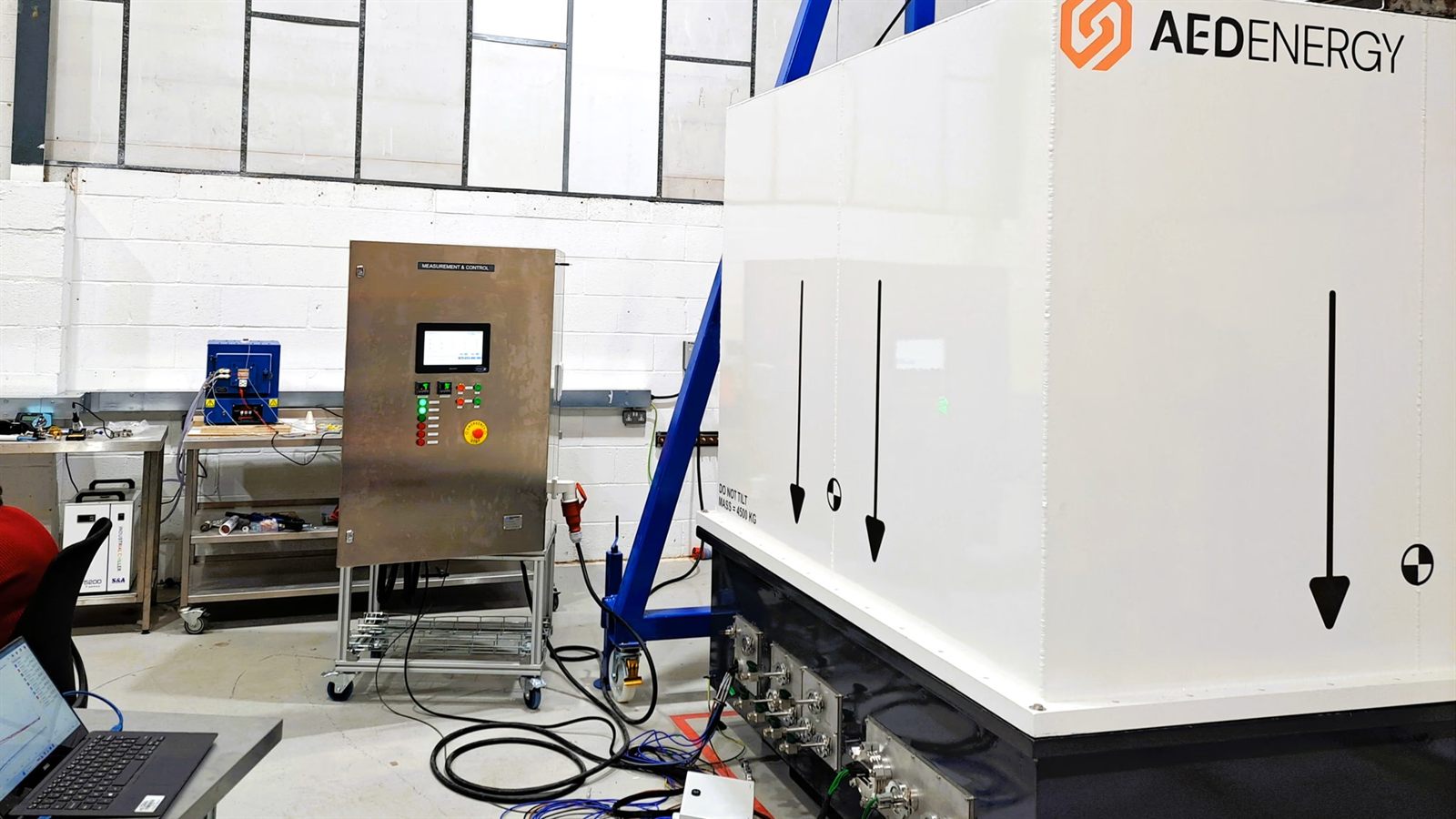
AED Energy is building a battery that stores electricity as heat, holding it near 800 degrees and releasing it on demand as clean power. Proving it needed a full-scale demonstrator: a device that could reach that temperature, hold it, and survive the cycle. Leading the mechanical design of that device, from a blank assembly to commissioned, proof-tested hardware, is the work shown here.
Owning the design
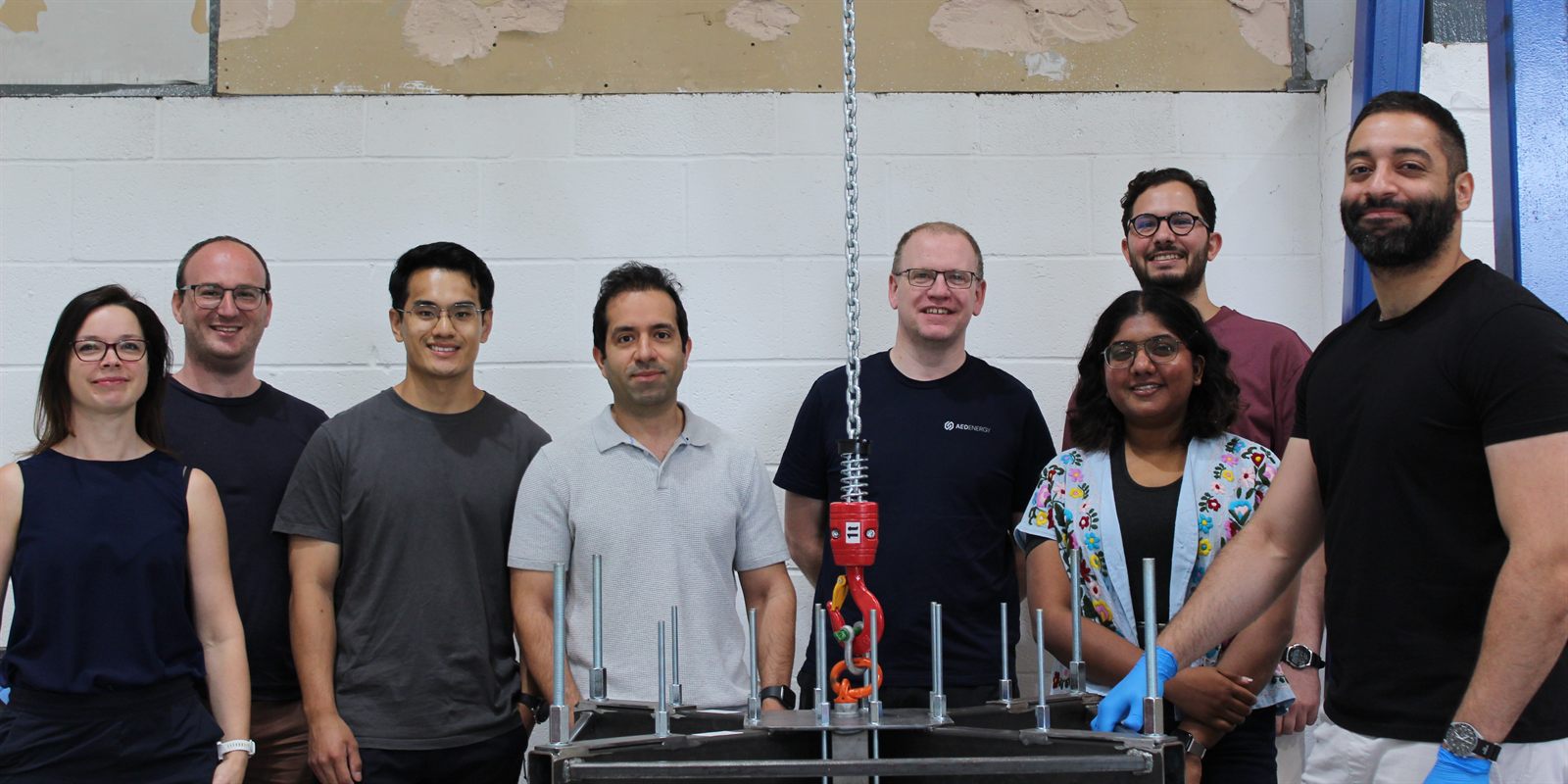
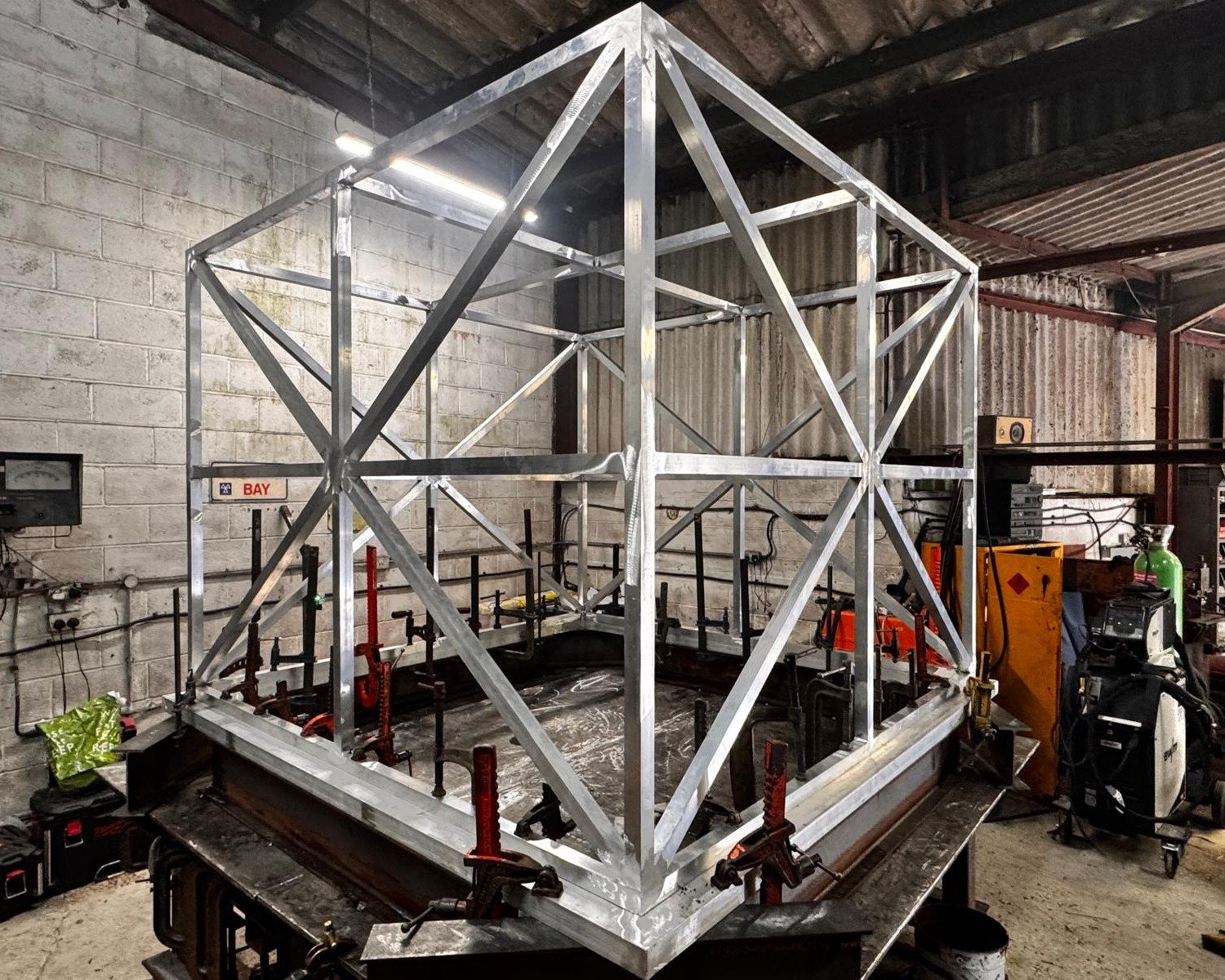
Lead mechanical design engineer on the build, owning the device from a blank assembly through to released drawings. The demonstrator came together in 3DEXPERIENCE as a single model of more than a thousand components, every part drawn to a standardised CAD and drawing system built in-house, toleranced with GD&T, and held to ECSS aerospace standards.
A thousand parts only stay manageable with discipline behind them. Hierarchy, version control, part numbering, and assemblies nested within assemblies were administered in the PDM system, keeping the model traceable as it grew. Concepts were worked both top-down and bottom-up, so the design could iterate fast without losing that control.
Design for manufacture ran the whole way through. A part is only as good as a supplier can make it and a fitter can reach it, so the model was built to be built.
Engineering for 800 degrees
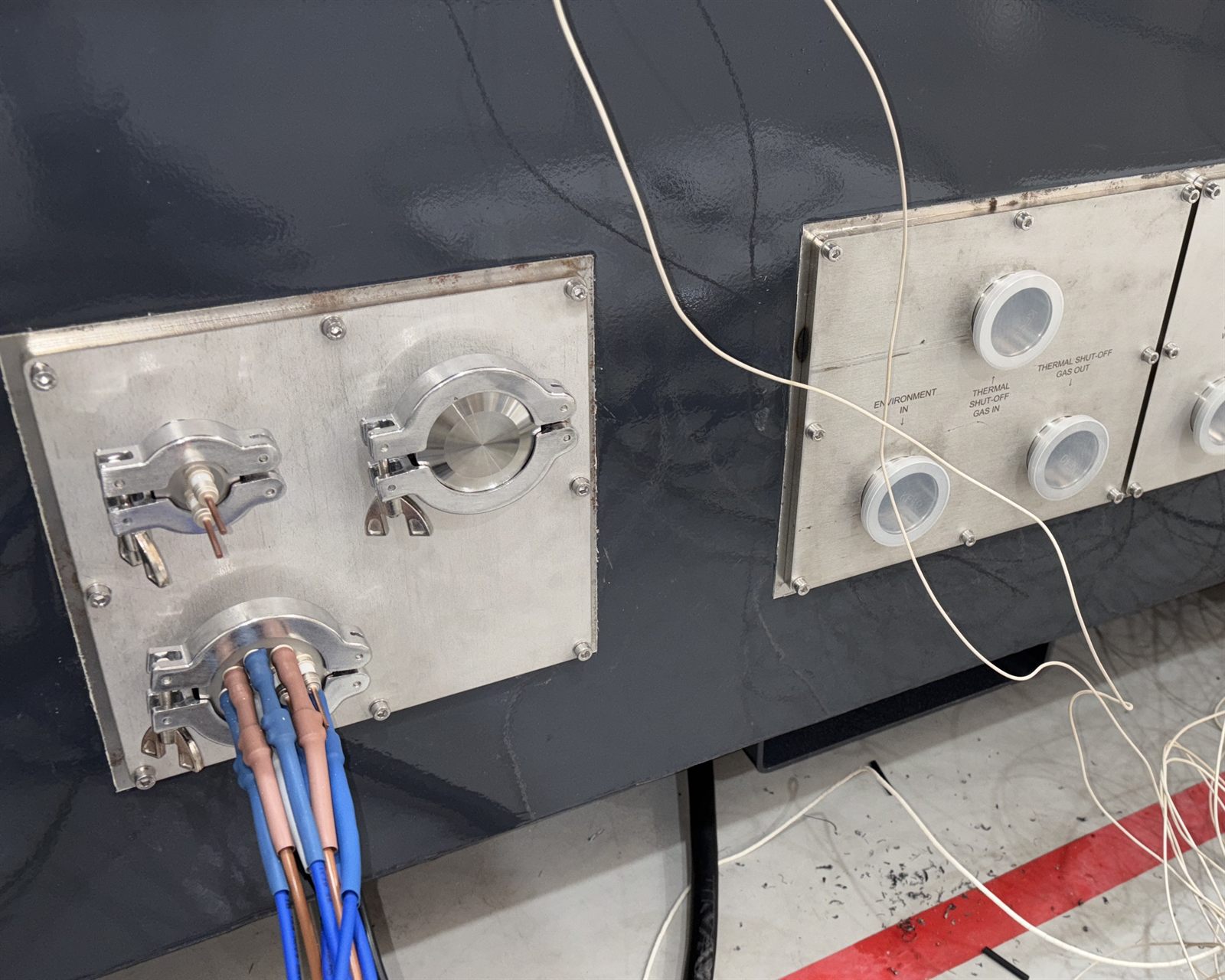
Everything starts from one number. At 800 degrees, ordinary steels lose their strength, materials grow and push against their neighbours as they heat, and an ill-designed connection turns into a heat leak. Keeping the structure sound at that temperature was the core of the work.
- Thermal hand calculations. Traced heat transfer through each multi-material stack, so the structure stays cool enough to carry load while the core stays hot.
- Thermal expansion. Sized every interface for growth, so parts that expand at different rates do not bind, fight, or crack each other.
- Mechanical and thermal analysis. Owned the mechanical design calculations and ran both structural and thermal simulation, confirming the structure carries its loads and keeps its shape and strength through the heat cycle.
- Vacuum design study. An earlier vacuum-based concept was taken through extensive thermal and outgassing analysis, then set aside when manufacturing cost ruled it out. The work fed straight into the design that went ahead.
- Material selection. Specified the hot-zone materials, high-nickel alloys and graphite, chosen for how they behave at temperature, not just at room conditions.
From model to running device
A released model is half the work. The device still has to be procured, built, and proven.
- Procurement. Engaged suppliers and manufacturers to refine the design, prove feasibility, and get long-lead and specialist parts production-ready.
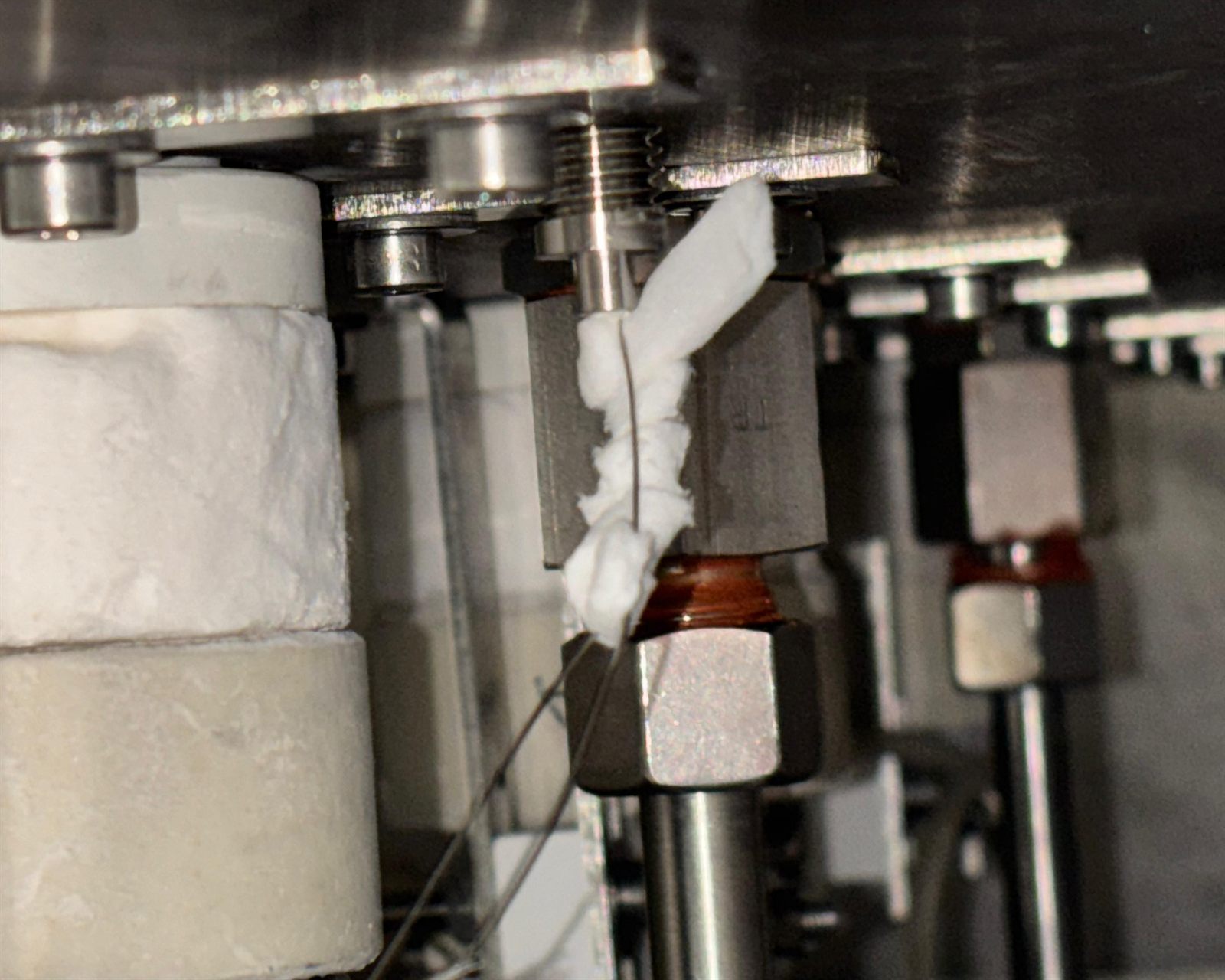
- Assembly and inspection. Wrote the assembly procedures, hardware assembly guides, and incoming inspection protocols, so every part was checked against its drawing before it reached the build.
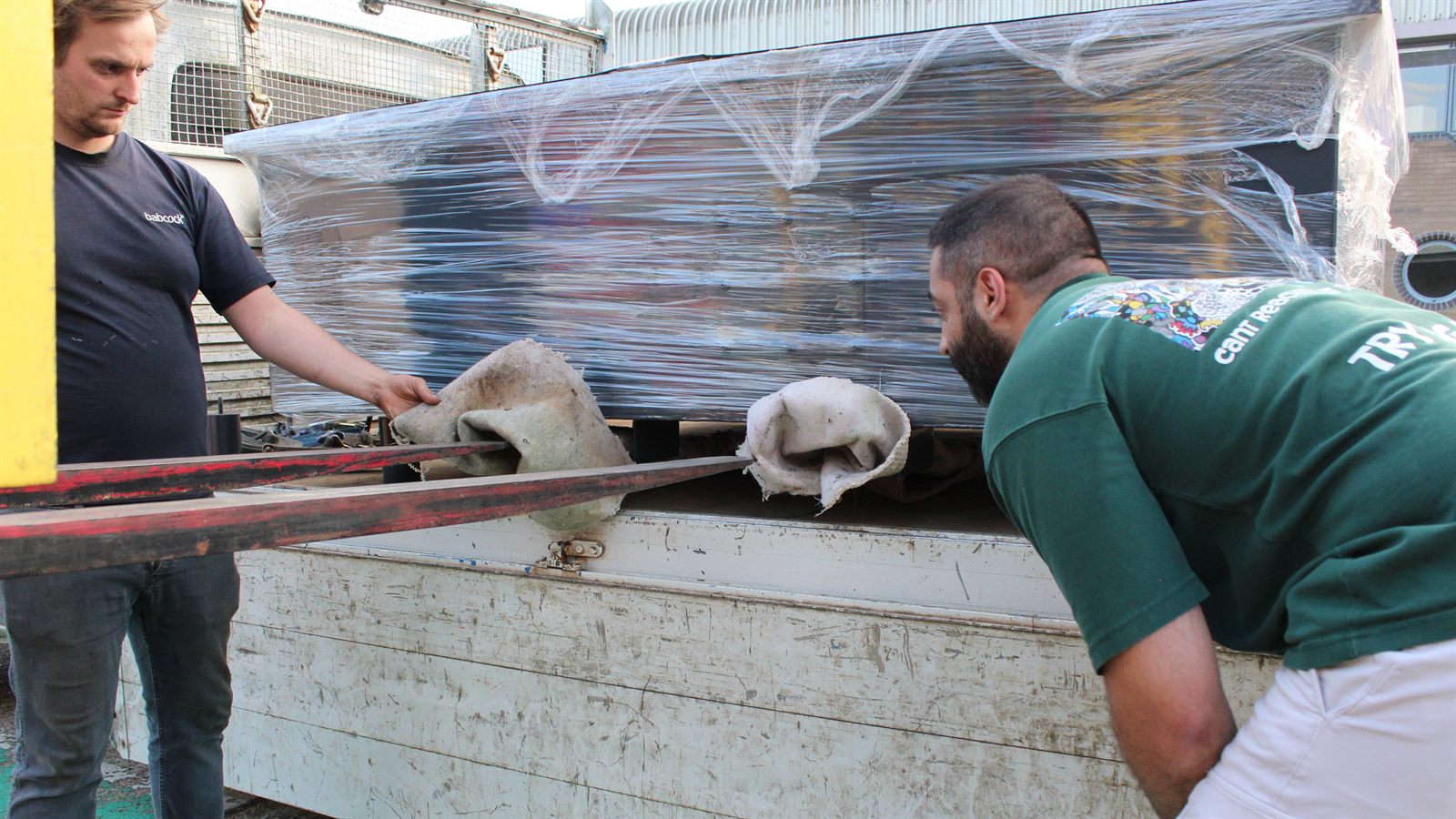
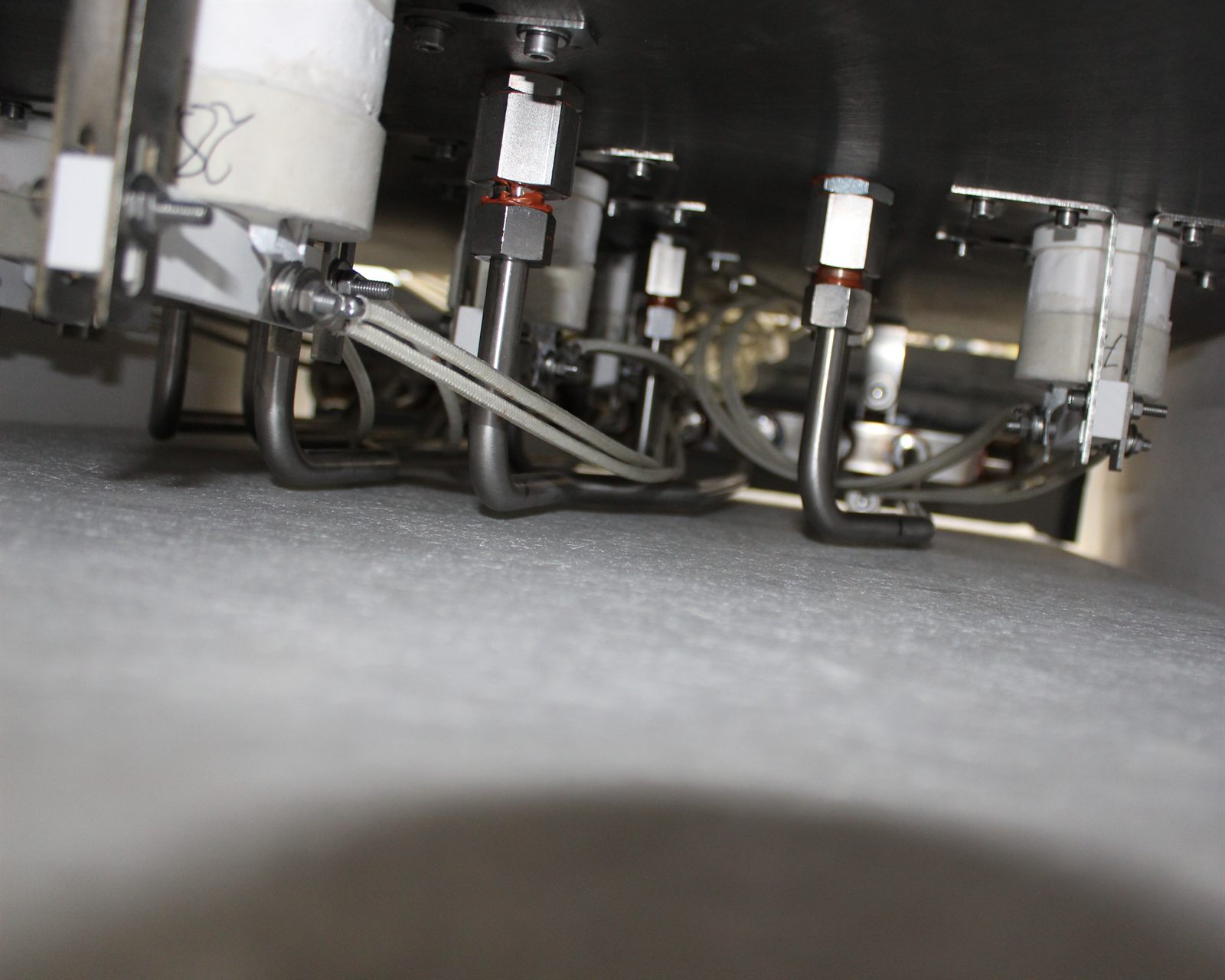
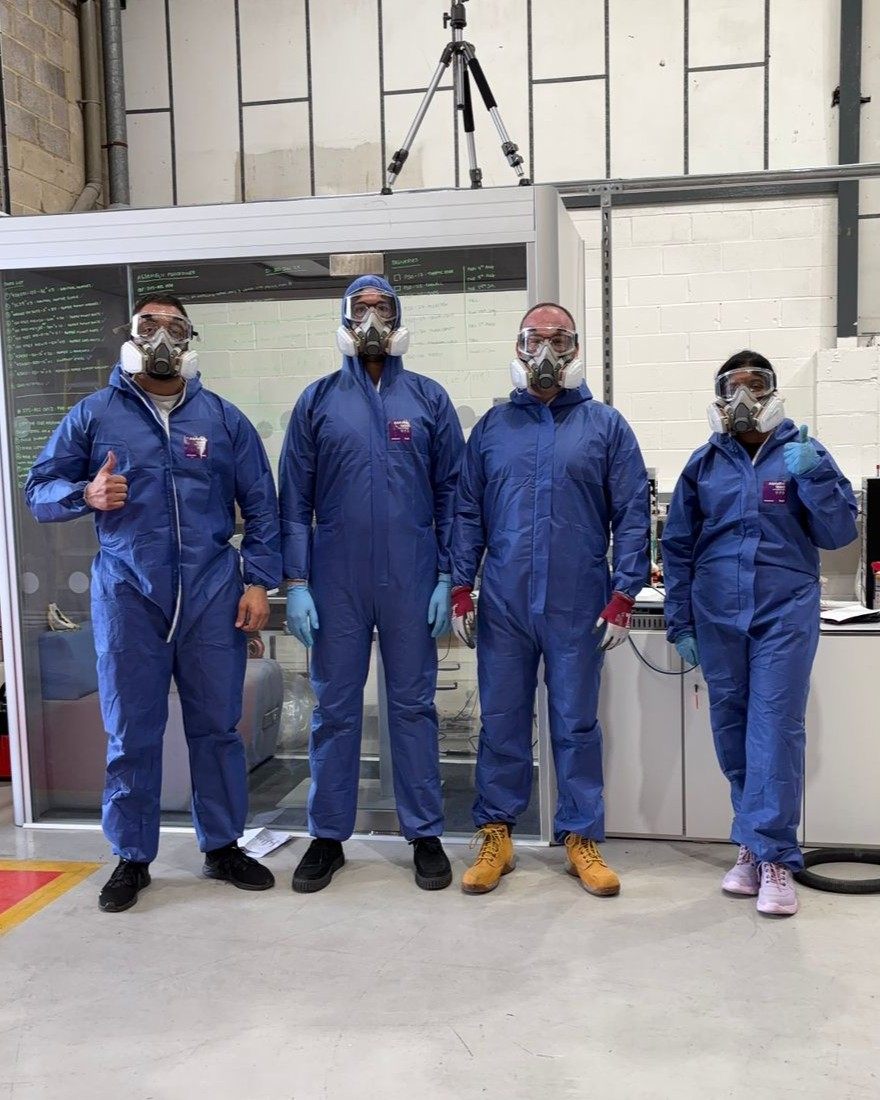
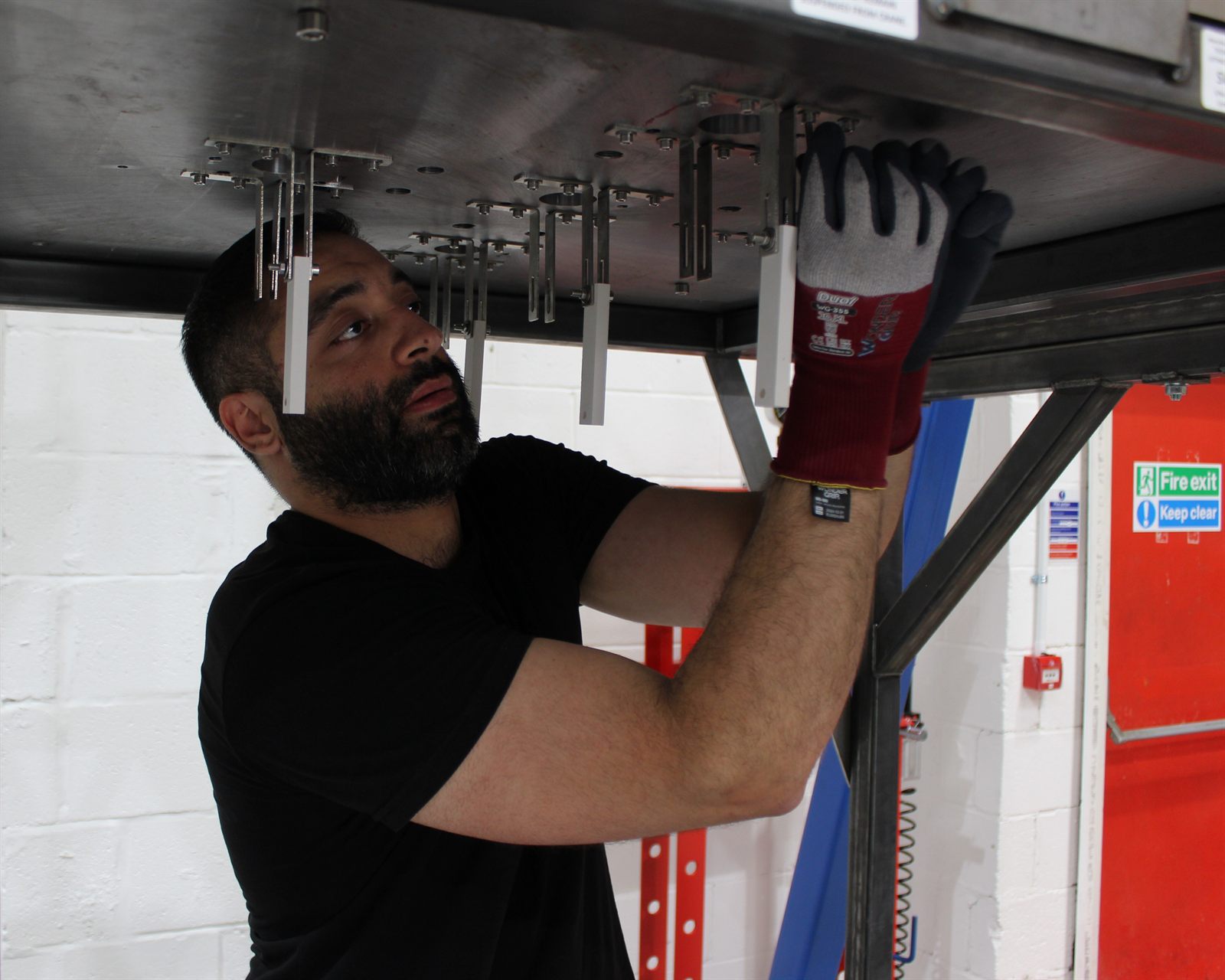
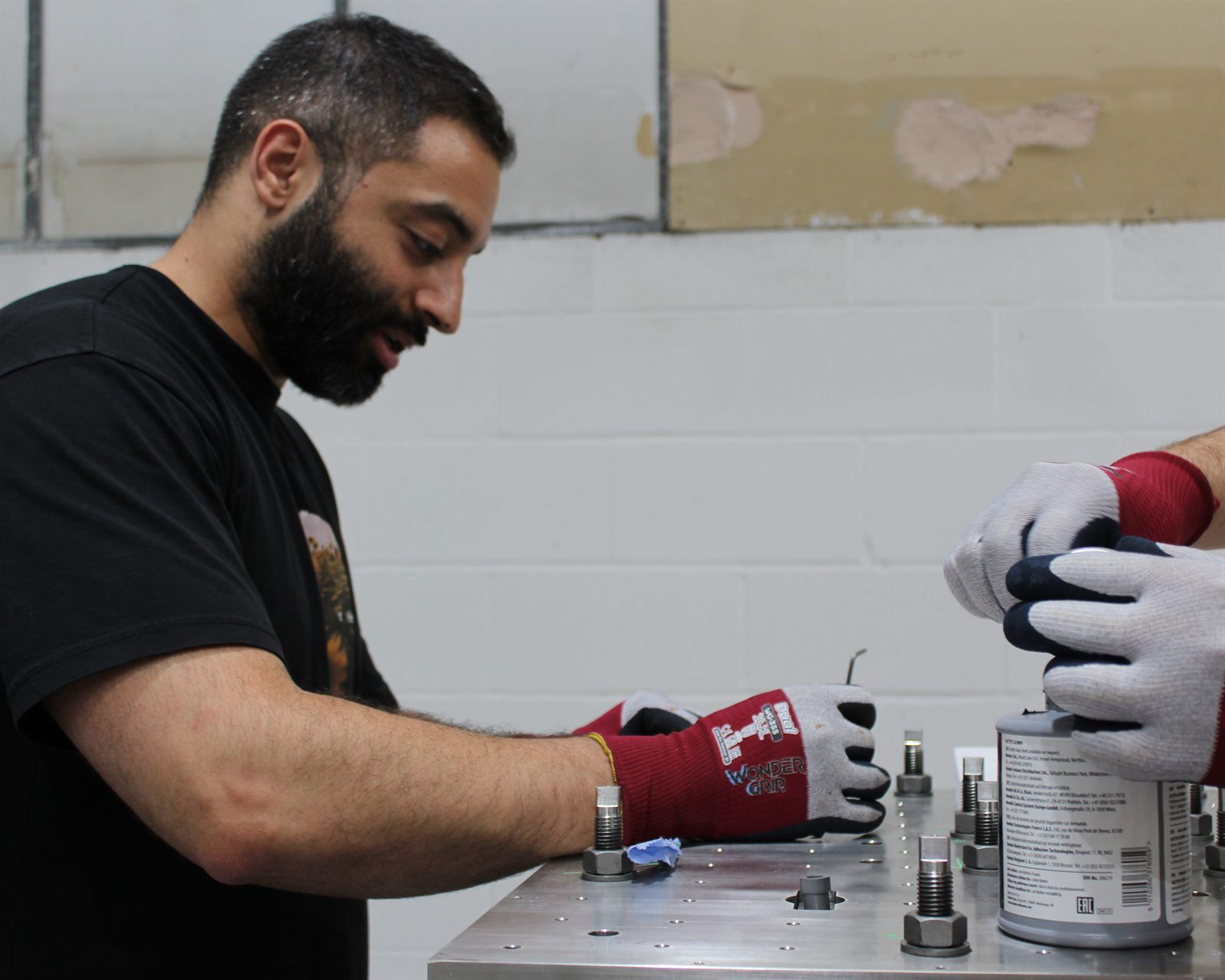
- Build and proof test. Worked hands-on through assembly and proof testing, taking the demonstrator from boxed parts to a commissioned, running device.
- Project management. Coordinated the cross-functional tasks, schedules, and design updates that kept the build on time.
By the numbers
System figures from aed.energy/technology
Out of the lab
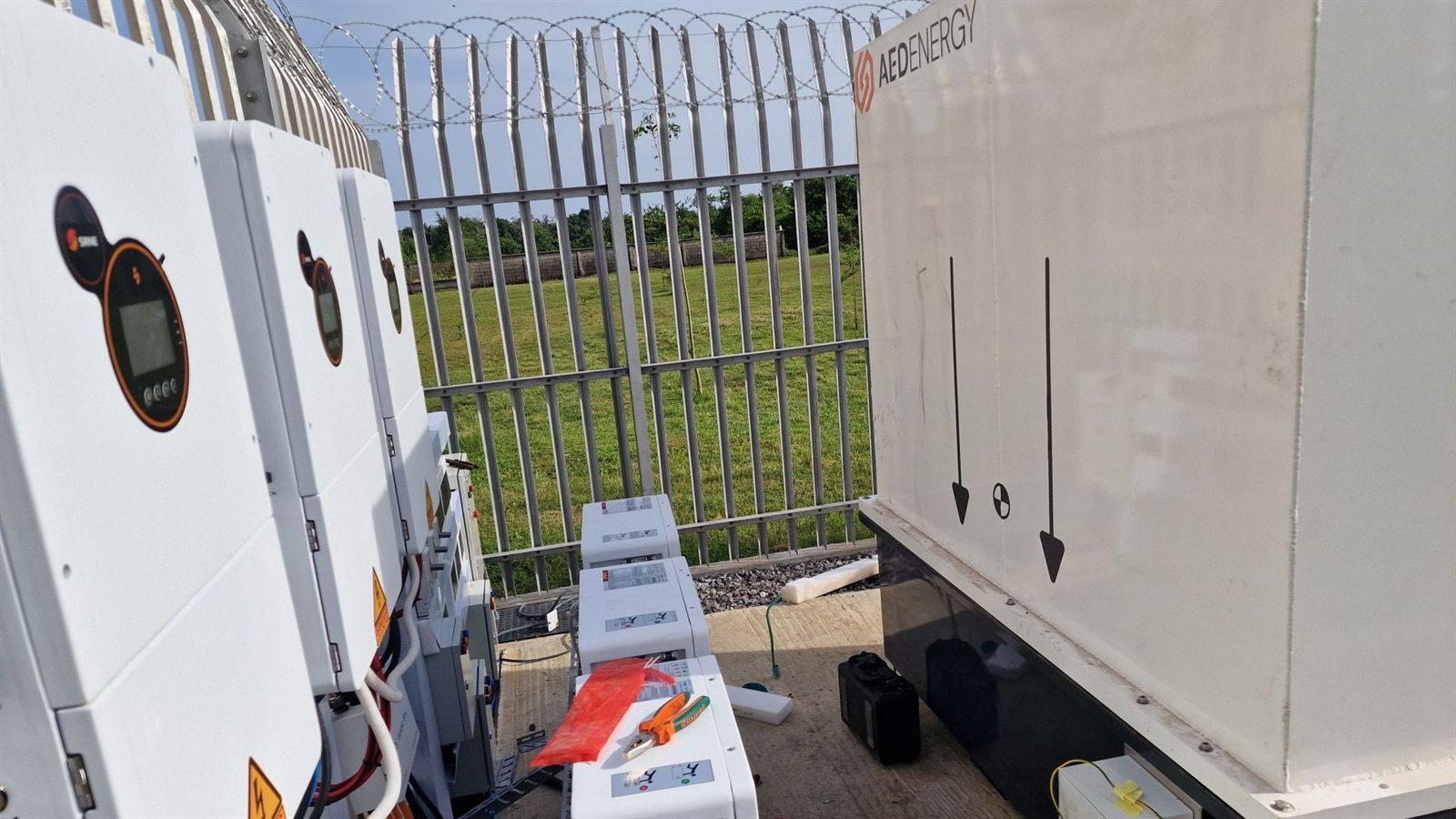
With the demonstrator commissioned and proven on the bench, AED's technology is heading for field trials in Nigeria, where long-duration storage turns wind and solar into power that stays on after dark. The hard part, a structure that lives at 800 degrees, is built and behind it.