CAD / Modeling
GEnx Turbofan
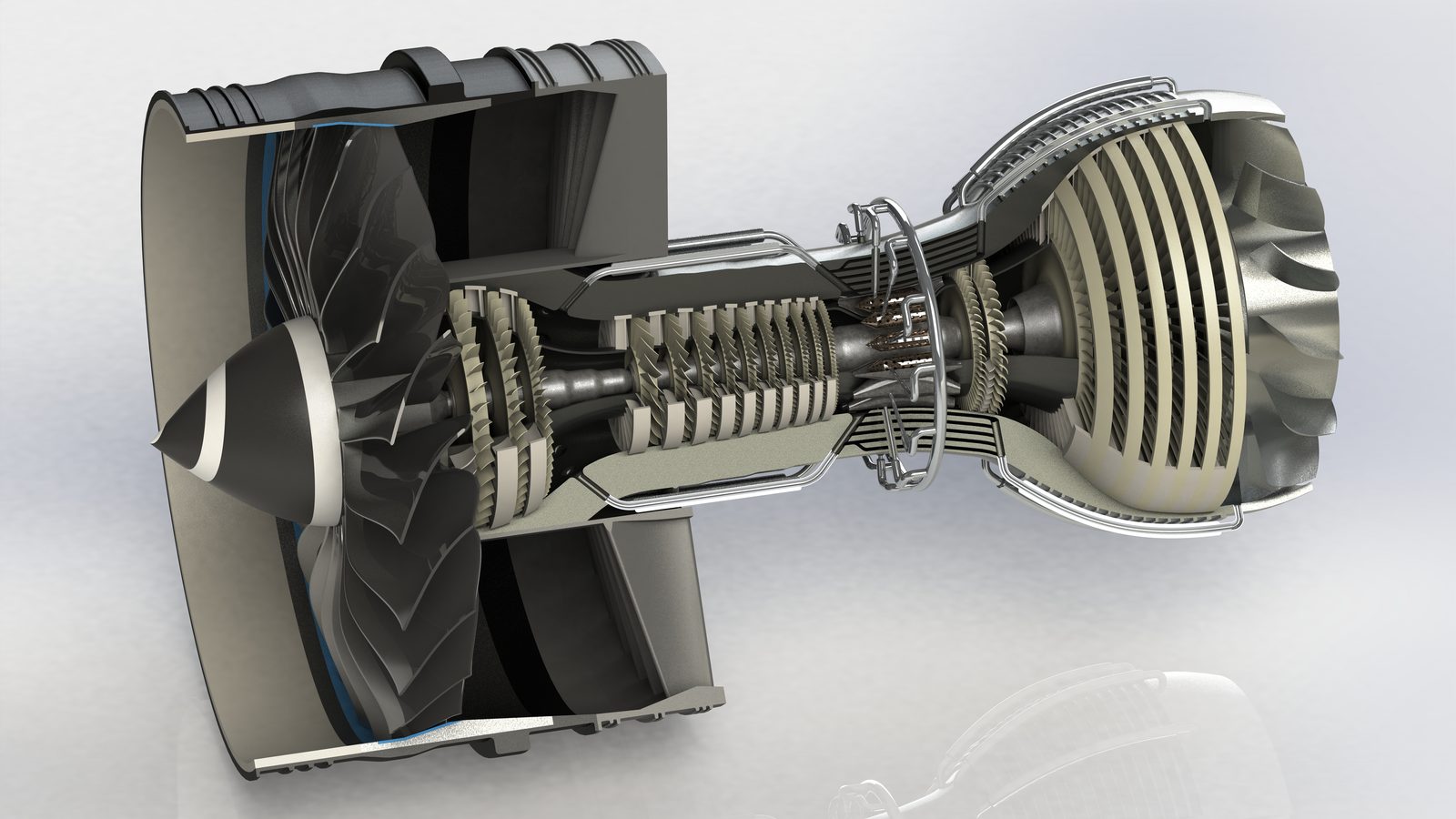
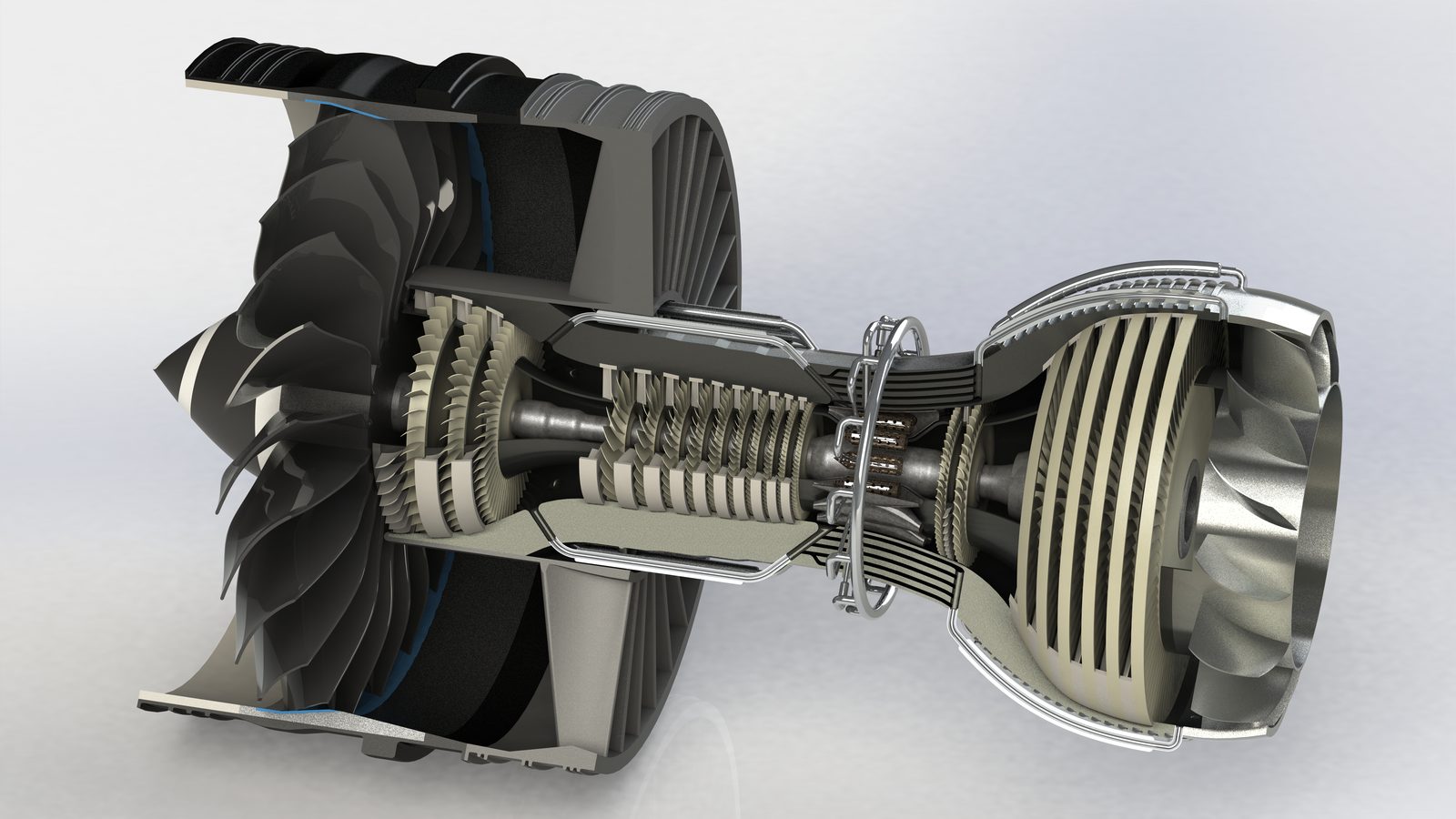
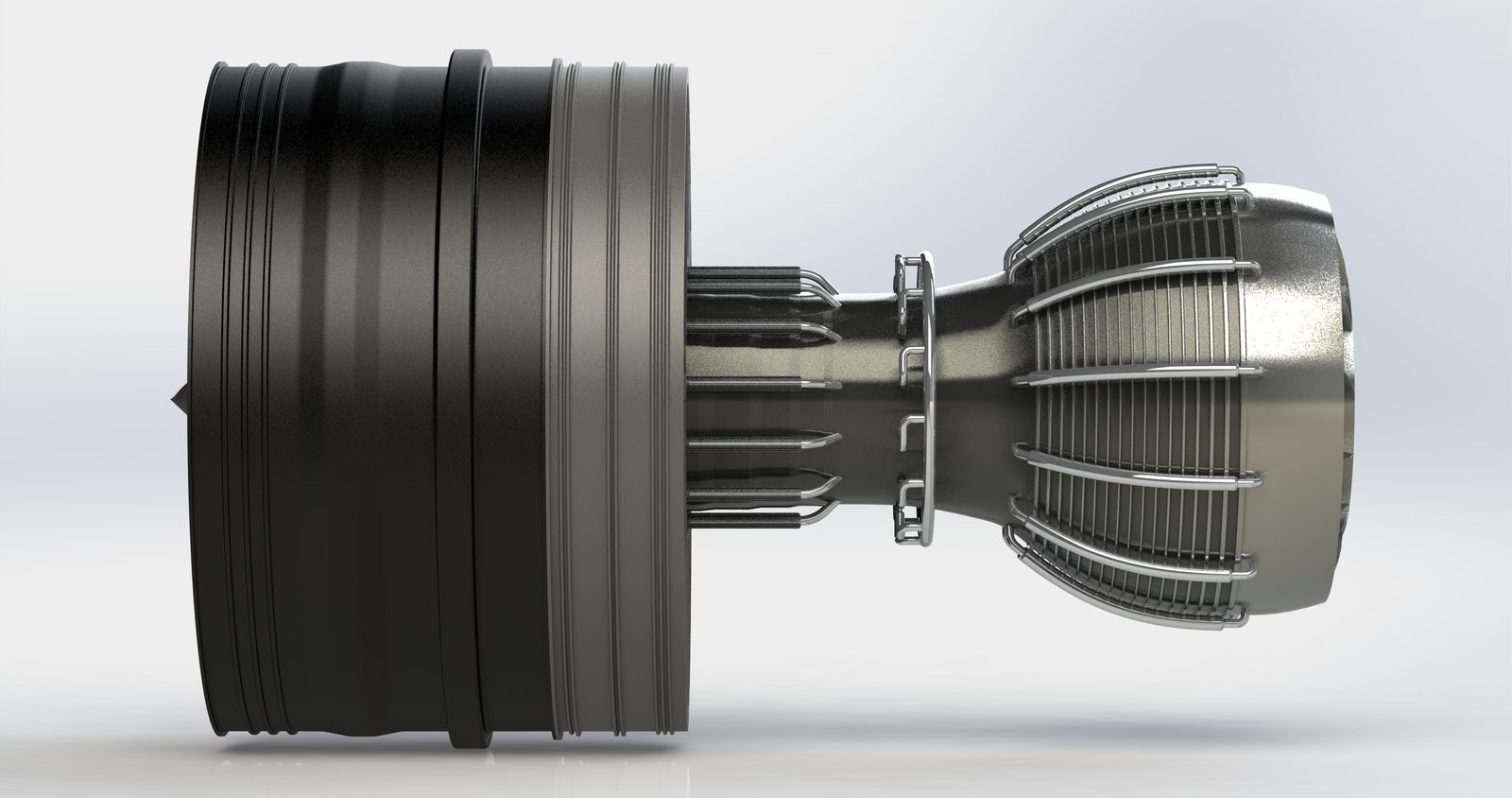
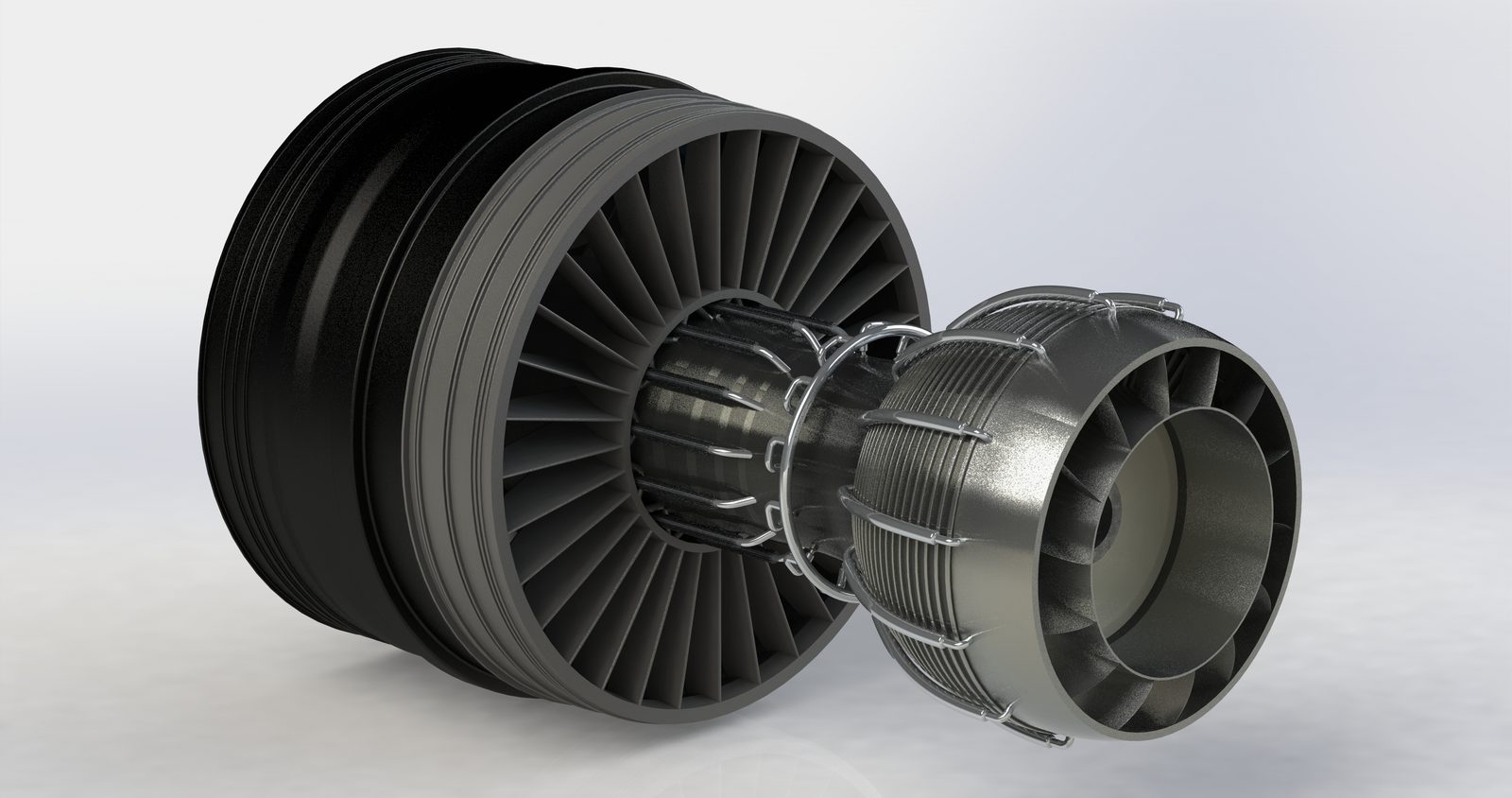
A high-bypass turbofan modeled in CAD from reference photographs alone: a depiction of the GEnx, not a measured replica. The full engine, fan to exhaust, reconstructed by eye across roughly a hundred parts. A draggable 3D model up top, the master drawing that set every proportion, then the engine taken apart stage by stage.
Overview
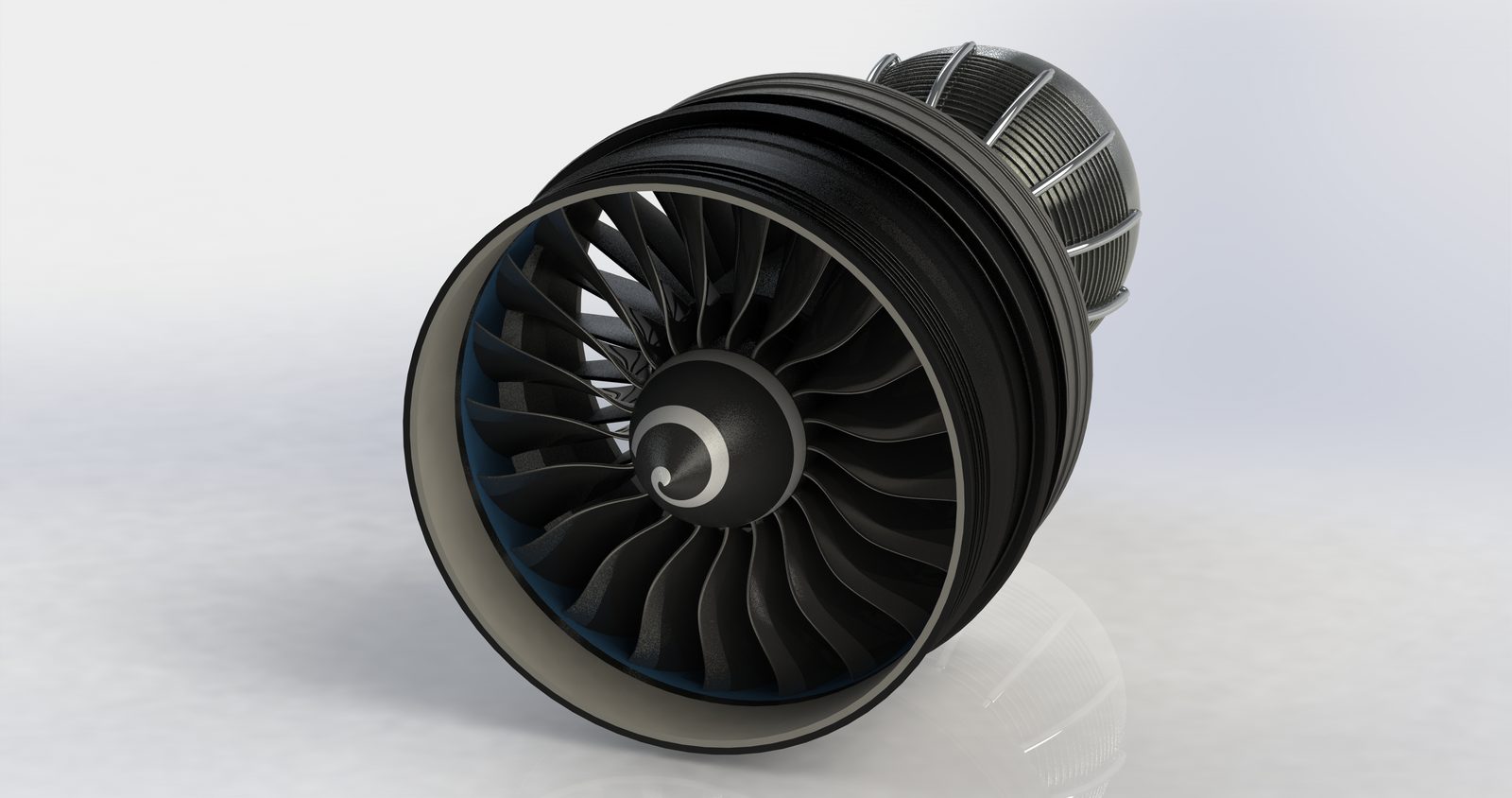
The GEnx is the engine that powers the Boeing 787 and 747-8. This model rebuilds the full engine, all six major sections from fan to exhaust, across around a hundred parts built over about a month. The complete assembly is built and colored in SolidWorks, then walked through below section by section.
Interactive model
Drag to orbit the engine, scroll to zoom. It runs in the browser, no plugin. Give it a moment to load.
The master drawing
The whole engine starts from one drawing: a 2D cross-section of the gas path that fixes the length and diameter of every section against every other.
Each part was modeled from its place on this template, so the fan, compressors, combustor, and turbines stay in proportion to one another. Every part traces back to this one reference.
Built up, part by part
The same cross-section, grown outward one part at a time. Each step adds a single part to the last, from the bare gas-path profile to the fully built engine.
The gas path, front to back
The six sections in turn, fan to exhaust.
Fan
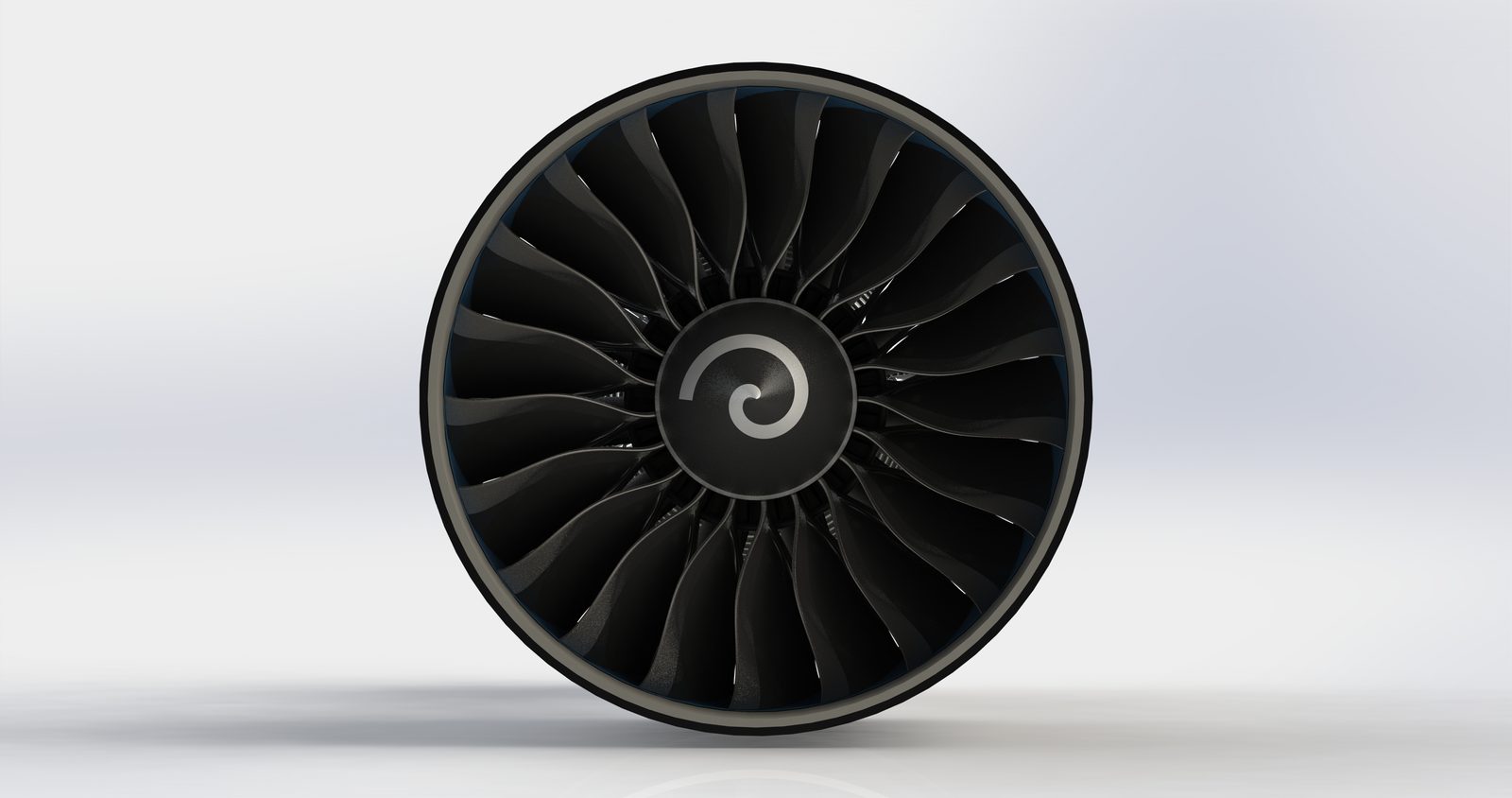
The large front rotor, where the model started. Its swept blades set the scale for everything behind them.
Low-pressure compressor
The booster stages, on the same shaft as the fan. First compression of the core air, stacked behind the fan hub.
High-pressure compressor
Where most of the compression happens. Rotor blades alternate with fixed stator rows, modeled stage by stage down the spool.
Combustion chamber
Where fuel burns. The annular liner and ring of fuel nozzles sit between the compressor exit and the first turbine.
High-pressure turbine
Directly behind the burner, driving the high-pressure compressor. Its blades carry modeled cooling passages, sitting in the hottest gas in the engine.
Low-pressure turbine
The rear stages driving the fan, several rows of progressively larger blades before the gas exits.